Featured

A Species a Day…

Attempting to write about a species a day…

In this new blog I am going to attempt to write about a species per day. My target is to just write one per day in the month of January 2020 but I would ideally love to carry on throughout the year. Now, I know what I’m like, I start with good intentions and peter out when distractions happen (I am easily distracted!). So a challenging but obtainable of a month will be the first task.

I’m going to keep them short (to help me, and you reading them!), with the format being what is the species, where I saw it, a fact or two and a ‘visual representation’ of said species. I can’t really draw and some my camera doesn’t have a decent lens to capture more mobile creatures so it won’t always happen but I hope to have something to demonstrate it. For example this:
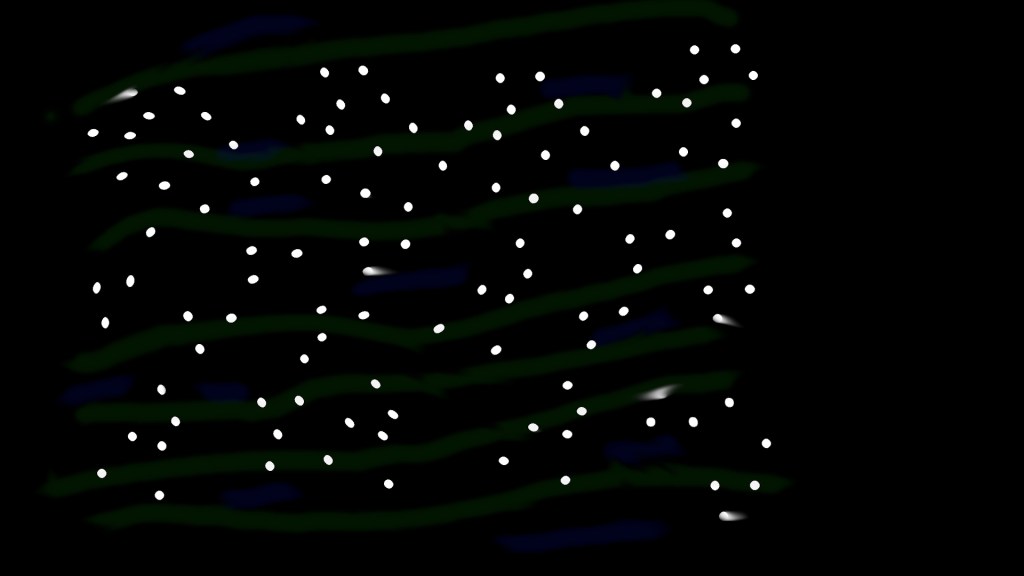
Which is of course a Starling (Sturnus vulgaris).

The species in question won’t necessarily be one I’ve seen that day; there will be days I won’t be able to get out, but hopefully one I’ve seen recently.

That’s it for now. Will start tomorrow (1st January 2020) and see how far I get.
Suspension of the Blog for now

I’m going to take a break from trying to write daily blog posts. I am running out of subjects and I am starting to not enjoy writing them. I tend to write for my own purposes, whether to get me out of a mental hole or to give me a sense of routine (those two are linked for sure). But I thought if I got to the point where I felt I had to write I would consider winding them down.

What I will do is post more sporadically. If I have particuarlly memorable wildlife encounter, or (and I hope this happens) I get inspired by a new form of wildlife to me. I really loved identifying beetles for instance and if I get really into them in 2021 it might be a fun project to document my journey. But who knows. For now I’m going to relax and see where the wind takes me. It does leave my Advent series unfinished alas but I’m okay with that, I now know for the future what my limit is and not to push over it too much. To go 10% of your comfort zone (as was a feature in one of my conservation jobs!) is fine and to be encouraged, beyond that is not good. Okay, writing a daily blog is not as uncomfortable as climbing a mountain or abseiling down a cliff but you get the general idea.

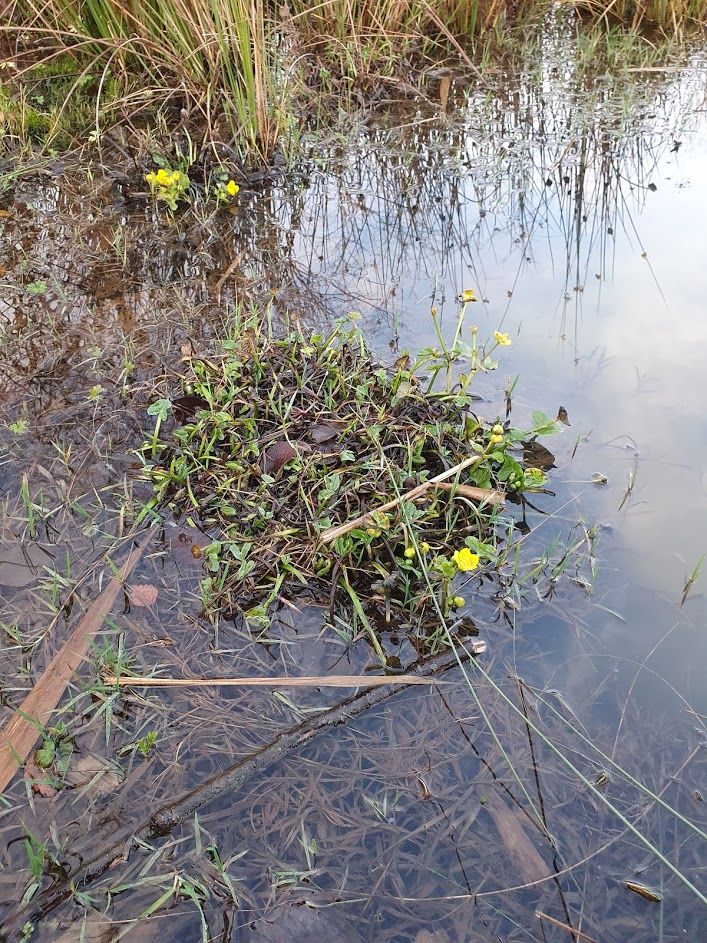
I leave you with a picture of a Marsh Marigold in flower already (the same plant I wrote about back in early January 2020). Spring is on its way.

Marsh Marigold in flower (barely!) 21st December 2020

Advent (!) Species No.22

26th December

There’s only 364 days to go until Christmas so I thought I’d get into the holiday spirit in early and pick a festive species for my last but two post. This is THE festive bird.

Robin Erithacus rubecula (Linnaeus, 1758)

It’s a robin. Who doesn’t know what a robin looks like. However our Eurasian Robins do look different to American Robins who are actually closely related to the UK blackbirds and thrushes. The really shouldn’t be called ‘redbreasts’ at all as a nickname as their breasts are definitely orange. However, the colour orange is a relatively recent invention (it’s true, orange was originally just a shade of red like burgundy or crimson, some people have ‘red’ hair but in reality they are ‘ginger’ or orange-haired), but the redbreast moniker still persists. Robin’s are a ubiquitous symbol of Xmas in the UK and I swear every other Christmas card in the house contains a robin on it somewhere. They sing all year round as they keep their territory’s throughout the year so are therefore angry at all times. You really wouldn’t want to translate their songs into English!

Robin! (Photo: Alex Cropper)

Advent species so far…

  • 1st: Goosander Mergus merganser
  • 2nd: December Moth Poecilocampa populi
  • 3rd: Horse Chestnut Aesculus hippocastanum
  • 4th Black-headed Gull Chroicocephalus ridibundus
  • 5th Cape Sparrow Passer melanurus
  • 6th Loricera pilicornis
  • 7th Great Tit Parus major
  • 8th Tipula paludosa
  • 9th Redwing Turdus iliacus
  • 10th Bank Vole Myodes glareolus
  • 11th Tawny Owl Strix aluco
  • 12th Sparrowhawk Accipiter nisus
  • 13th Kingfisher Alcedo atthis
  • 14th Nebria brevicollis
  • 15th Virginia Opossum Didelphis virginiana
  • 16th —–
  • 17th Bacchus elongata
  • 18th Reed Warbler Acrocephalus scirpaceus
  • 19th Red Deer Cervus elaphus
  • 20th Jay Garrulus glandarius
  • 21st —-
  • 22nd —-
  • 23rd Winter Gnat Trichocera annulata
  • 24th Peregrine Falco peregrinus
  • 25th —-
  • 26th Robin Erithacus rubecula

Advent Species No.21

December 24th

I will get to number 24 eventually! Not really got the excuse of being busy from now on! Today’s species isn’t exactly Christmassy (nor have most of the rest if I’m being honest!) but it’s one that I have seen today when I was on a small walk around the park. I’m pretty certain it’s the first time I’ve seen one there too.

Peregrine Falco peregrinus Tunstall, 1771

It’s not often that I see an apex predator in my park but there was one today. Only fleeting but close enough to tell what it was through binoculars. I noticed it was chunky and had powerful wingbeats, unlike the Kestrel, which is the more common falcon around here. I think it was a male as it wasn’t too large and from the plumage I think it was a juvenile. They have a brown plumage and very distinct spotted, almost vertical striped, markings on their breasts. Adults tend to be dark blue/grey with horizontal looking pinstripes across their breasts. Like many birds of prey the female is bigger than the male. Today’s bird could have come from anywhere as juvenile Peregrines can wander for hundreds of miles once they’ve fledged. I had heard years ago that the word peregrine means ‘wanderer’ so this may reflect that behaviour.

Not my finest photo! This is an adult peregrine photographed a few years ago in Cumbria (Photo: Alex Cropper)

Advent species so far…

  • 1st: Goosander Mergus merganser
  • 2nd: December Moth Poecilocampa populi
  • 3rd: Horse Chestnut Aesculus hippocastanum
  • 4th Black-headed Gull Chroicocephalus ridibundus
  • 5th Cape Sparrow Passer melanurus
  • 6th Loricera pilicornis
  • 7th Great Tit Parus major
  • 8th Tipula paludosa
  • 9th Redwing Turdus iliacus
  • 10th Bank Vole Myodes glareolus
  • 11th Tawny Owl Strix aluco
  • 12th Sparrowhawk Accipiter nisus
  • 13th Kingfisher Alcedo atthis
  • 14th Nebria brevicollis
  • 15th Virginia Opossum Didelphis virginiana
  • 16th —–
  • 17th Bacchus elongata
  • 18th Reed Warbler Acrocephalus scirpaceus
  • 19th Red Deer Cervus elaphus
  • 20th Jay Garrulus glandarius
  • 21st —-
  • 22nd —-
  • 23rd Winter Gnat Trichocera annulata
  • 24th Peregrine Falco peregrinus

Advent Species No.20

23rd December

Apologies for not writing a post over the last two days, was way two tired two days ago and was too busy yesterday. I will endeavour to write two posts today to make up. In theory the advent period ends tomorrow but I will get to 24 species even if it takes me to beyond Xmas. Anyway, on with the first species of the day.

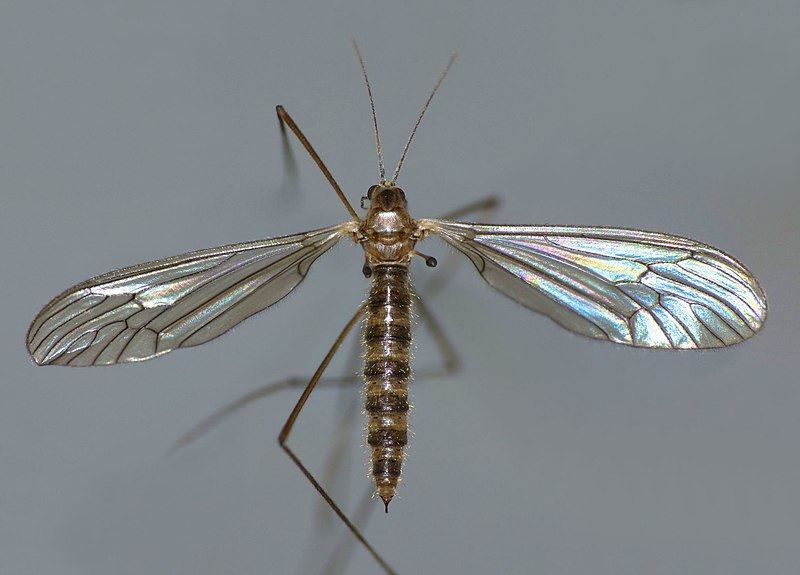
Winter Gnat Trichocera annulata Meigen, 1818

These are the strange little flies you see dancing in your garden on a mild winter’s day. Most flies live in warmer periods but these ones also live in the winter! Actually, they also live as adults in other seasons but they are way less noticeable in other seasons than in winter. I’m going to use a get out clause here as not every winter gnat is Trichocera annulata but it is by far the most common species. So the ones I see in the garden might not be those ones at all (one reason I won’t record any sightings unless I’m certain of the species). It is only the males that perform the dance and they do this to attract females, think of an office Christmas party in non-Covid times. I kind of like these enigmatic creatures, I like the novelty of seeing insects flying when insects should be snuggled up in the warmth somewhere.

Not a life sized picture! They are pretty tiny in real life. I wanted to find a picture of them dancing but couldn’t see one on Wiki Commons alas (Photo: Steve Kerr via Wiki Commons)

Advent species so far…

  • 1st: Goosander Mergus merganser
  • 2nd: December Moth Poecilocampa populi
  • 3rd: Horse Chestnut Aesculus hippocastanum
  • 4th Black-headed Gull Chroicocephalus ridibundus
  • 5th Cape Sparrow Passer melanurus
  • 6th Loricera pilicornis
  • 7th Great Tit Parus major
  • 8th Tipula paludosa
  • 9th Redwing Turdus iliacus
  • 10th Bank Vole Myodes glareolus
  • 11th Tawny Owl Strix aluco
  • 12th Sparrowhawk Accipiter nisus
  • 13th Kingfisher Alcedo atthis
  • 14th Nebria brevicollis
  • 15th Virginia Opossum Didelphis virginiana
  • 16th —–
  • 17th Bacchus elongata
  • 18th Reed Warbler Acrocephalus scirpaceus
  • 19th Red Deer Cervus elaphus
  • 20th Jay Garrulus glandarius
  • 21st —-
  • 22nd —-
  • 23rd Winter Gnat Trichocera annulata

Advent Species No.19

20th December

A lazy-ish Sunday, but I managed to get out for a little while to find some wildlife. So today’s species is one I have actually seen today and not one I’ve randomly picked out of a book or seen earlier in the year. Novelty I know!

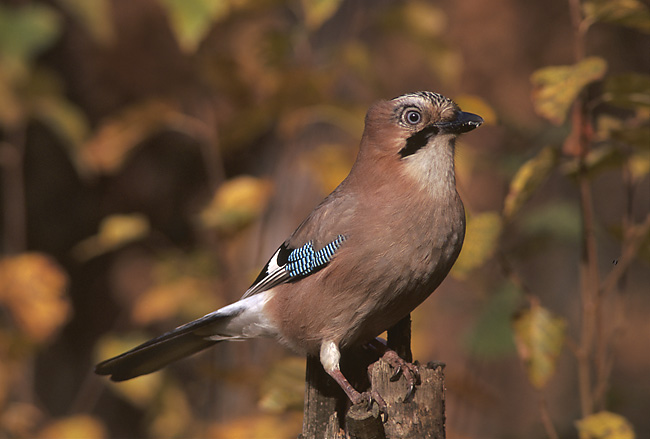
Jay Garrulus glandarius (Linnaeus, 1758)

I heard a screech than a low flash of crow-sized a bird and that was it. The clue was the bright white rump together with the screech. It was a Jay. We only have one type of Jay in the UK so we just call it Jay, but officially it’s the Eurasian Jay. It is predominantly light brown in colour with a bright blue patch on it’s otherwise black and white wing. They are in the corvid family so are related to crows. Unlike many crows they are more secretive, it is always a highlight to see one in a garden, unlike ten-a-penny jackdaws or magpies for example! I like Jays a lot as they are common but retiring but at the same time flashy. Go and see one!

Jay! (Photo: Marek Szczepanek via Wiki Commons)
Bonus pic! My only picture of a Jay, and you can barely see it! (Photo: Alex Cropper)

Advent species so far…

  • 1st: Goosander Mergus merganser
  • 2nd: December Moth Poecilocampa populi
  • 3rd: Horse Chestnut Aesculus hippocastanum
  • 4th Black-headed Gull Chroicocephalus ridibundus
  • 5th Cape Sparrow Passer melanurus
  • 6th Loricera pilicornis
  • 7th Great Tit Parus major
  • 8th Tipula paludosa
  • 9th Redwing Turdus iliacus
  • 10th Bank Vole Myodes glareolus
  • 11th Tawny Owl Strix aluco
  • 12th Sparrowhawk Accipiter nisus
  • 13th Kingfisher Alcedo atthis
  • 14th Nebria brevicollis
  • 15th Virginia Opossum Didelphis virginiana
  • 16th —–
  • 17th Bacchus elongata
  • 18th Reed Warbler Acrocephalus scirpaceus
  • 19th Red Deer Cervus elaphus
  • 20th Jay Garrulus glandarius

Advent Species No.18

December 19th

Another wildlife free day, not for want of trying though, I’ve not really been anywhere where wildlife has been prominent. So, I go back to sightings I’ve had this year. Today’s is from right at the end of August when I kept seeing the largest UK terrestrial mammal at a site I was trapping for amphibians (before it was built on unfortunately). Kind of festive though as a few people eat the meat of this animal at this time of year.

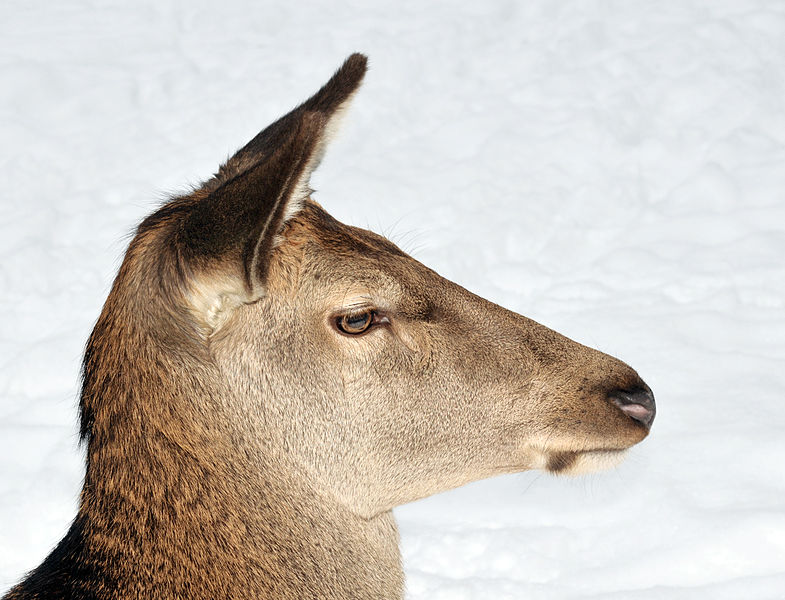
Red Deer Cervus elaphus Linnaeus, 1758

It’s not often that I see truly wild examples of red deer in the countryside. True, there is a large population at the nearby Lyme Park, but these are managed and don’t leave the confines of the park. The ones I saw were wild and were wandering through fields. They were female red deer who are slightly smaller than males and don’t have the antlers that males have. Females are fawny-red in colour with a pale/white rump. In some parts of the UK red deer can cause problems in forestry where they are prone to eating newly planted or newly shooting conifers, this is particularly problematic in the Scottish Highlands. However, this can be explained by lack of natural predators, wolves have been extinct in the UK for centuries who would have naturally controlled the deer. They also interbreed happily with the closely related Sika Deer and in some places pure red deer are becoming scarce.

Gorgeous portrait of a female red deer (Photo: Michael Gäbler via Wiki Commons)

Advent species so far…

  • 1st: Goosander Mergus merganser
  • 2nd: December Moth Poecilocampa populi
  • 3rd: Horse Chestnut Aesculus hippocastanum
  • 4th Black-headed Gull Chroicocephalus ridibundus
  • 5th Cape Sparrow Passer melanurus
  • 6th Loricera pilicornis
  • 7th Great Tit Parus major
  • 8th Tipula paludosa
  • 9th Redwing Turdus iliacus
  • 10th Bank Vole Myodes glareolus
  • 11th Tawny Owl Strix aluco
  • 12th Sparrowhawk Accipiter nisus
  • 13th Kingfisher Alcedo atthis
  • 14th Nebria brevicollis
  • 15th Virginia Opossum Didelphis virginiana
  • 16th —–
  • 17th Bacchus elongata
  • 18th Reed Warbler Acrocephalus scirpaceus
  • 19th Red Deer Cervus elaphus

Advent Species No.17

18th December

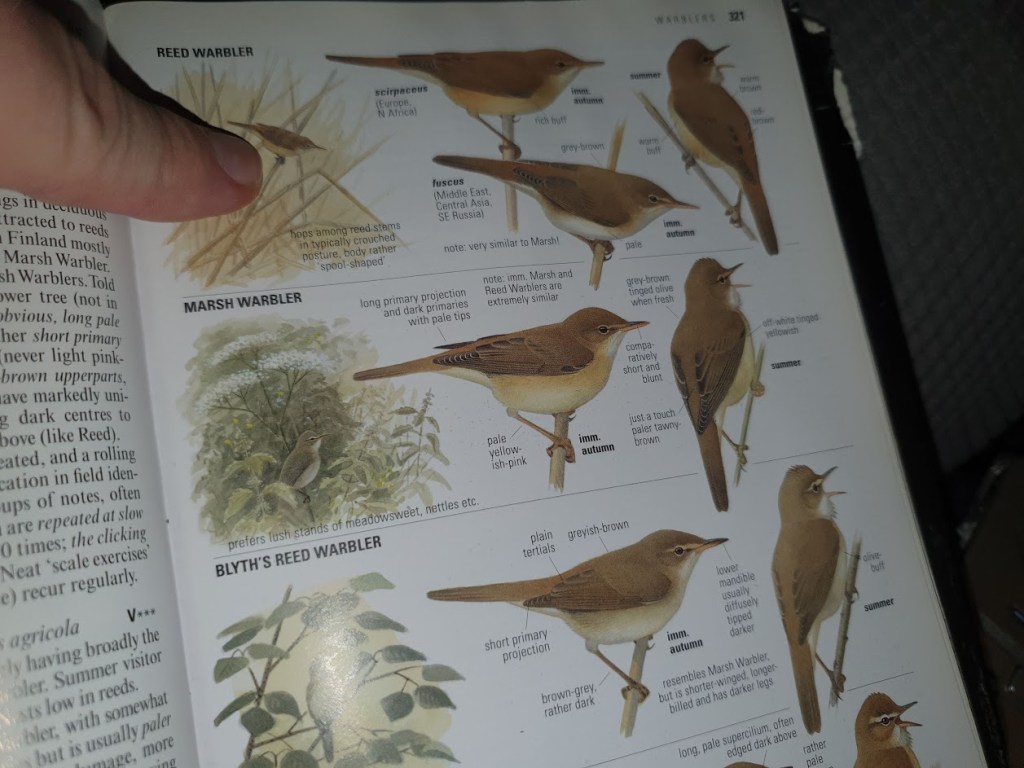
Hmmm…. Hmmm… not entirely sure what to write about. Barely been out the house and been busy staring at a screen and other non-outdoors activities. Okay, what I am going to do, as I’m stumped after staring at this page for 10 minutes, and nothing obvious has come to me, is I’m going to flick through a book and stop at a random page and at a random animal. It will be a bird book (the first one I touched as I reached out to the book shelf), and it will be from the Collins Bird Guide luckily, which is the bird ‘bible’ for European birds. And the species is…

Reed Warbler Acrocephalus scirpaceus (Hermann, 1804)

Very festive this one. This is a small sparrow sized bird which spends its winters in tropical Africa and will reach Europe in April. Luckily, for a random pick in a European bird book, this is a bird that occurs in the UK, and as its name suggests is closely associated with reedbeds. It is pretty dull looking, mostly brown on brown. It does have a mad-crazy song which you can hear at dusk and dawn; it does sound like it’s trying to sing all the notes at once. Although it is not as crazy sounding as another reedbed warbler, the sedge warbler. As I said, it will be opening its Christmas presents in Africa, but it has given me a sound of summer as I googled the song to remind me. Again for a random pick this is a bird I have seen, admittedly not this year, but is relatively easy to see or hear given the correct habitat.

A recreation of the exciting moment I picked today’s subject!

Advent species so far…

  • 1st: Goosander Mergus merganser
  • 2nd: December Moth Poecilocampa populi
  • 3rd: Horse Chestnut Aesculus hippocastanum
  • 4th Black-headed Gull Chroicocephalus ridibundus
  • 5th Cape Sparrow Passer melanurus
  • 6th Loricera pilicornis
  • 7th Great Tit Parus major
  • 8th Tipula paludosa
  • 9th Redwing Turdus iliacus
  • 10th Bank Vole Myodes glareolus
  • 11th Tawny Owl Strix aluco
  • 12th Sparrowhawk Accipiter nisus
  • 13th Kingfisher Alcedo atthis
  • 14th Nebria brevicollis
  • 15th Virginia Opossum Didelphis virginiana
  • 16th —–
  • 17th Bacchus elongata
  • 18th Reed Warbler Acrocephalus scirpaceus

Advent Species No.16

December 17th

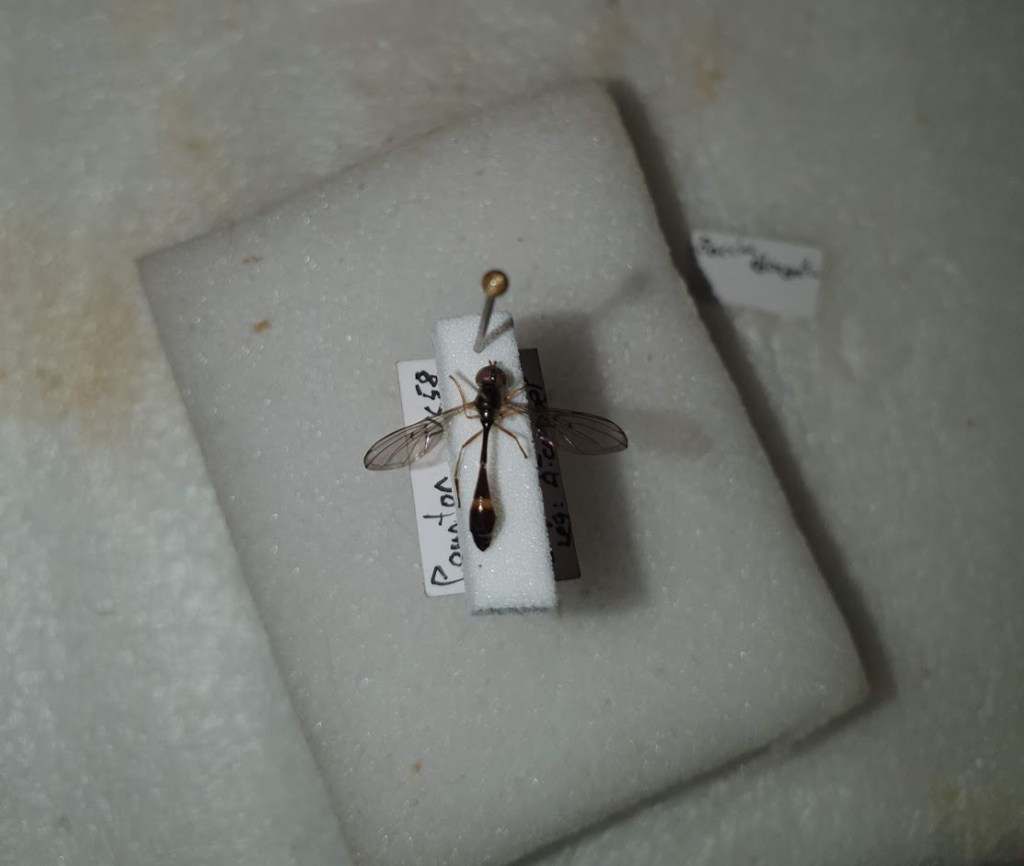
This series of blog posts has made me look at, and try to identify, insect specimens that have taken this year. I can be a little un-focussed at times (probabaly the opposite of Asperger’s if that is such a thing) so my mind wanders from one thing to the next, whether it be from being a keen birder one day, to a keen reader the next, or being a keen entomologist the day after that, as a result things can start stacking! Hence I’ve had today’s specimen in the freezer since July. I fully intended to ID the next day but my brain wandered to something else so it remained in the freezer until the other day when I got it out to ID it and record it. Oh yes, it’s another obscure creature today, forgot to mention that!

Bacchus elongata (Fabricius, 1775)

No English name so no clue as to what it is just from the name alone (I find this one of the most frustrating aspects with things which only have scientific names). It is a hoverfly (also known as flower flies elsewhere in the world) and one that is pretty easy to identify. It is mostly black with a black face. There are a few yellow markings towards the end of the abdomen but that’s about it. Only, this hoverfly is (relatively) long and thin, a lot thinner than any other thin hoverflies. I certainly won’t be in doubt again when I see another one. Apparently it is relatively common but can be hard to see as they tend not to be obvious unlike many hoverflies. There we go, not sure if there is anything to add.

I found this one almost dead in the kitchen, didn’t know what it was at the time (Photo: Alex Cropper)
  • 1st: Goosander Mergus merganser
  • 2nd: December Moth Poecilocampa populi
  • 3rd: Horse Chestnut Aesculus hippocastanum
  • 4th Black-headed Gull Chroicocephalus ridibundus
  • 5th Cape Sparrow Passer melanurus
  • 6th Loricera pilicornis
  • 7th Great Tit Parus major
  • 8th Tipula paludosa
  • 9th Redwing Turdus iliacus
  • 10th Bank Vole Myodes glareolus
  • 11th Tawny Owl Strix aluco
  • 12th Sparrowhawk Accipiter nisus
  • 13th Kingfisher Alcedo atthis
  • 14th Nebria brevicollis
  • 15th Virginia Opossum Didelphis virginiana
  • 16th —–
  • 17th Bacchus elongata

Advent Species No.15

December 15th

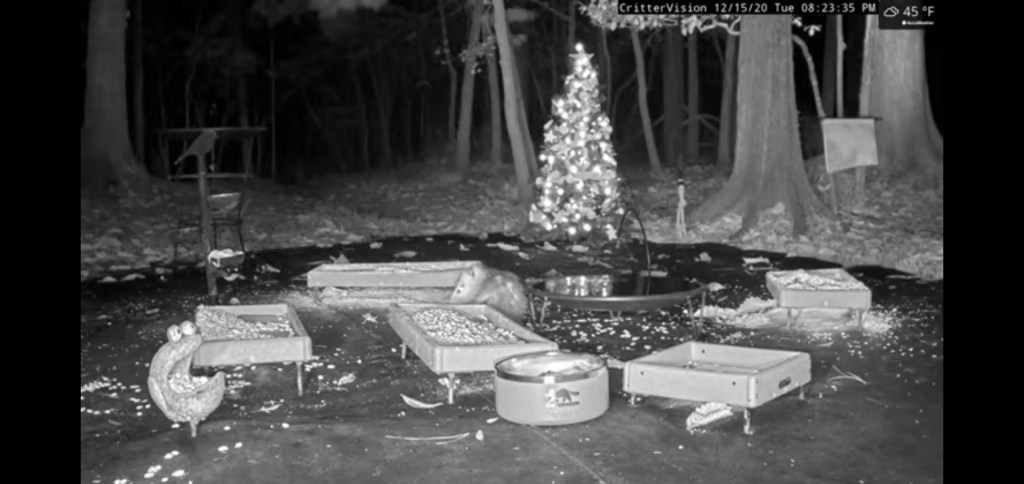
Today is the 16th I know. There won’t be another blog today for reasons I won’t go into and it passed my mind to write one yesterday when I should have done. Anyway, I was struggling to get to sleep last night so I went on the internet to help clear my mind. As some of you may know I occasionally watch wildlife webcams, and I have featured a couple of species which I have seen on said webcams. I was watching one called ‘Critter Cam’ which, as you may gather from the name, is American. It was dark there so I wasn’t expecting to see anything, but lo and behold there was indeed a critter in front of the cam. One most of my American readers will be instantly familiar with, but one which my UK readers would think is Australian.

Virginia Opossum Didelphis virginiana (Kerr, 1792)

Americans refer to these as just possums (correct me if I’m wrong though!) and are a familiar urban creature who are opportunistic scavengers. I think the closest equivalent in the UK in terms of behaviour is maybe the fox. But, possums are marsupials and are the size of domestic cats and look nothing like foxes. In fact they don’t look like anything we have in Europe. I don’t know too much about them other than what I have just written. They look pretty hideous in my opinion, but I’m sure they may be quite endearing if I’m being kind, again, let me know your opinions on possums to enlighten me!

It’s in the middle of the shot looking sneaky!

Advent species so far:

  • 1st: Goosander Mergus merganser
  • 2nd: December Moth Poecilocampa populi
  • 3rd: Horse Chestnut Aesculus hippocastanum
  • 4th Black-headed Gull Chroicocephalus ridibundus
  • 5th Cape Sparrow Passer melanurus
  • 6th Loricera pilicornis
  • 7th Great Tit Parus major
  • 8th Tipula paludosa
  • 9th Redwing Turdus iliacus
  • 10th Bank Vole Myodes glareolus
  • 11th Tawny Owl Strix aluco
  • 12th Sparrowhawk Accipiter nisus
  • 13th Kingfisher Alcedo atthis
  • 14th Nebria brevicollis
  • 15th Virginia Opossum Didelphis virginiana

Advent Species No.14

14th December

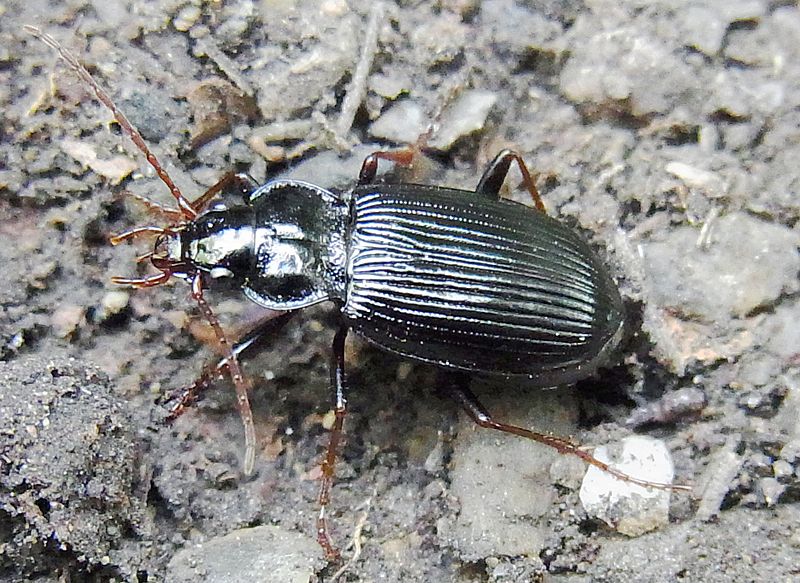
There’s been a frozen ground beetle in my freezer since the end of May. For some reason I never got round to getting it out and trying to identify it. As I said in a few days ago for another species of ground beetle (Loricera pilicornis) I’m in the very early days of trying to learn about them (huge subject, 300+ species, but that’s nothing compared to the 4000+ species of beetle overall). The method when starting out is to collect specimens in order to build up a reference collection, which together with books will build your knowledge up if you use them enough. Unfortunately you do have to dispatch specimens in order to do so, hence why it was in the freezer. In order to preserve species you first know what they are, easy in the case of birds or mammals. Not so easy when your species are small and the only differences between species are subtle and minute features,

Nebria brevicollis (Fabricius, 1792). There is actually a tentative English name suggested by one of the UK’s beetle experts; Common Heart-shield but I’ve only seen it in one place so I’ll use the Latin only for my list.

This beetle is one of the most common species of beetle in the UK. My specimen came from an amphibian pit fall trap on a development site near Warrington. There must have been hundreds or even thousands on that site as some of the traps had over 10 individuals and there was perhaps 150 traps. In other words this maybe one of the most common animals in the UK, but one I spent over an hour trying to ID. It is strange that many people could correctly name a rare British bird but would not be able to name an incredibly common insect (me included!). The picture may offer a clue as to why it is hard to identify. It’s black and indistinct, like many ground beetle species.

Nebria brevicollis looks very similar to other species, including one where you have to look at the hairs on its rear most feet (or tarsi) to make a decision between one or the other (Photo: Siga via Wiki Commons)

Advent species so far:

  • 1st: Goosander Mergus merganser
  • 2nd: December Moth Poecilocampa populi
  • 3rd: Horse Chestnut Aesculus hippocastanum
  • 4th Black-headed Gull Chroicocephalus ridibundus
  • 5th Cape Sparrow Passer melanurus
  • 6th Loricera pilicornis
  • 7th Great Tit Parus major
  • 8th Tipula paludosa
  • 9th Redwing Turdus iliacus
  • 10th Bank Vole Myodes glareolus
  • 11th Tawny Owl Strix aluco
  • 12th Sparrowhawk Accipiter nisus
  • 13th Kingfisher Alcedo atthis
  • 14th Nebria brevicollis
Design a site like this with WordPress.com
Get started