Day 9 – Ivy

A briefer introduction, been inside most of the day (and knew I would be) so I recorded a wild plant on my way out. Here it is…

What: Ivy Hedera helix L.

When: 9th January 2019

Where: Chester Road, Poynton, Cheshire (VC58), UK

Who saw it? Me

How was it recorded? Will be posted to iRecord. http://www.brc.ac.uk/irecord/home

Is it larger than a blackbird? Yes

What is it? A creeping evergreen plant that characteristically climbs trees, poles and houses. Although the plant I took a photo of today was on the ground. Unlike most UK native flora this plant flowers in the Autumn months where it provides a late-season source of nectar for a large variety of insects.

A fact I learned about the species: In folklore is seen as both a cursed and beneficial plant. In some areas of the country it was believed you could cure warts by pricking the leaves as many times as the patient had warts and then pinning the pricked leaves to a thorn (Mabey, 1996)
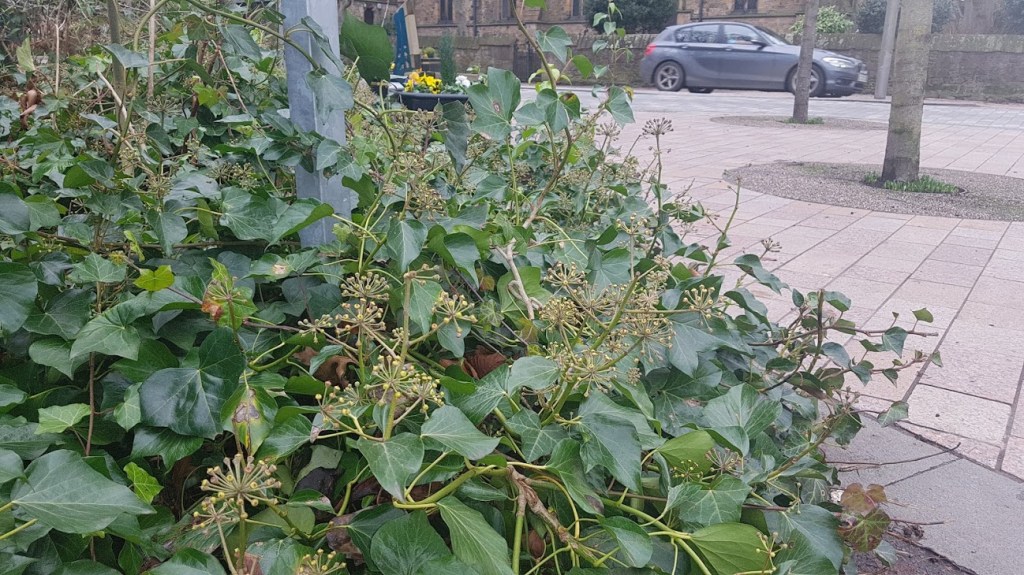
Ivy, Poynton, Cheshire 9th January 2020 (Photo: Alex Cropper)

Is it charismatic? Hard to tell if plants are charismatic or not to be honest. But I’d say it was in this case. Anything that is a little out of the ordinary, like a plant that flowers counter to anything else, and a plant that has drawn that much superstition through the ages must have bit of charisma I’d say.
Day 8: Starling

Today I’ve spent the day writing my tax return when I should have been volunteering with the RSPB at Dove Stone. Maybe I could have been writing about something a little bit more exotic than usual but alas no, the taxman calls. What I have seen is a large amount a species of bird in my garden as I forlornly look out the window.

What: Starling Sturnus vulgaris Linnaeus, 1758

When: 8th January 2020

Where: My garden, Poynton, Cheshire, UK

Who saw it? Me

How did I record it? eBird (www.ebird.org)

Is it larger than a blackbird? Hmm.. roughly the same size, maybe very slightly smaller.

What is it? A very common but declining bird found just about everywhere in the UK in winter months when are resident birds are augmented by birds from eastern Europe. They have an iridescent black plumage with bright white spots at this time of year, giving them a night sky appearance. They are gregarious, with 63 seen in my garden this afternoon. They are famous for forming huge murmarations in winter, forming many a weird and wonderful shape as they get ready to roost. They are in a steep decline however as a breeding bird in the UK, dropping 50% in 20 years (Balmer et al, 2013).

A fact I have learned about this bird: They have been introduced into other parts of the world, notably to North America, by homesick immigrants from Britain and Europe. They are doing a lot better in their introduced range than in their home range.

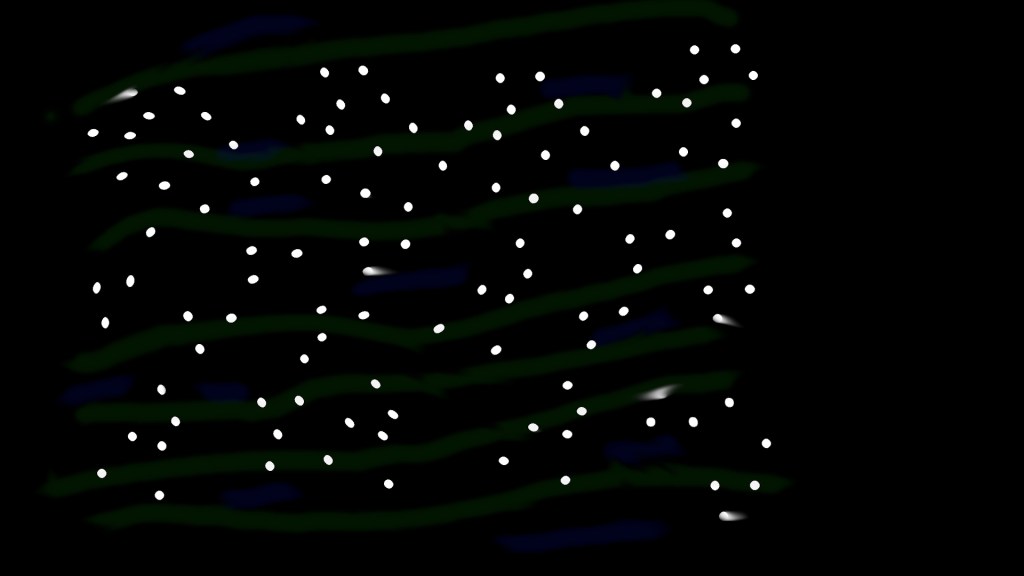
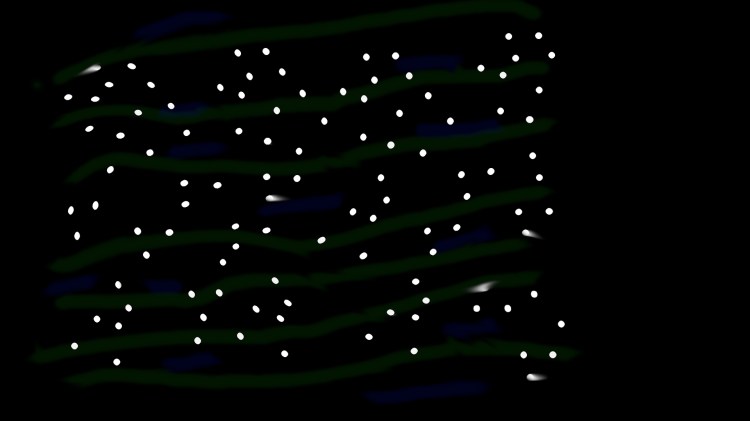
My visualisation of this species: Not a photo this time!

This is supposed to represent the iridescent night-sky plumage of a winter starling

Is it charismatic? Yes definitely! Anything that is gregarious is charismatic in my book. I can still hear them chattering to each other even as I write this. They are great mimics, highly intelligent and can make you smile.

Day 7 – Black-headed Gull

Day 7! A whole week’s worth of daily posts. Getting easier to remember to do it but I suspect it will get harder to think what to write about; guess that’s the challenge really. It’s all for me really, all about me actually writing things down so I can discipline myself to write regularly, and you get to read it if you want. Today’s species is one I saw today on my birding ‘patch’ – basically a local area you visit often an gradually you see changes, learn what’s regularly there and when, and what’s a rarity. I find it more rewarding than going further afield to be honest, you get to know your local area.

What: Black-headed Gull Chroicocephalus ridibundus (Linnaeus, 1766)

When: 7th January 2020

Where: Poynton Pool, Cheshire, UK

Who saw it? Me

Where was the record submitted? To eBird https://ebird.org/home (110 individuals recorded)

Is it larger than a blackbird? Yes

What is it? A small member of the gull family. A common species inland during the UK winter, not as ubiquitous during the summer where they tend to head to the coastal areas and large inland wetland sites to breed. Very noisy when gathered in their breeding sites with a raucous screaming caw type call, not like the “sound of the seaside” herring gull call at all; their latin species name ridibundus means laughing, after their call. Their head, whilst dark in spring and summer is mostly white with one or two black vertical streaks on the sides. The ‘black’ head in the breeding season is actually dark brown. An inaccurate English name.

A fact I have learned about this species: Whilst not declining as much as some other gull species in the UK, they do appear to be contracting their range slightly in the winter, particularly in the north and west of the British Isles (Balmer et al, 2013)

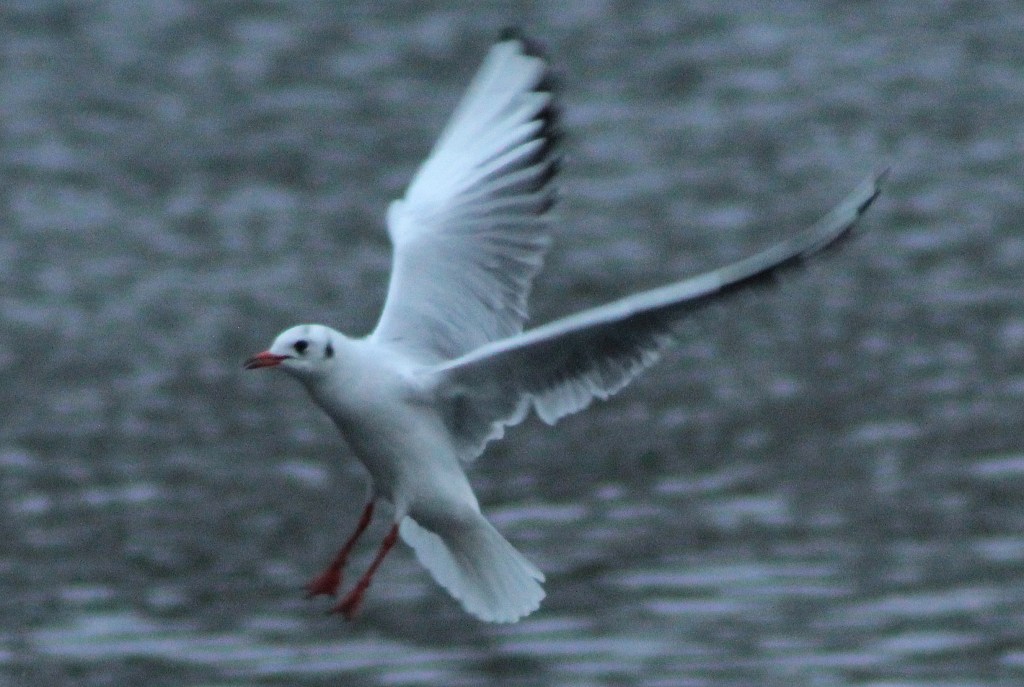
Winter-plumaged Black-headed Gull (Photo: Alex Cropper)

Is the species charismatic in my opinion? Yes I think. Anything that is this raucous is definitely charismatic. Although on a windy day like today they were very subdued. They don’t get the bad publicity that larger gulls get and tend to go under the radar of the public conscious I think despite how common they are at this time of year.

Day 6 – Grey Squirrel

The cold’s virtually gone! So time for a species I’ve seen today. I’ve been wanting to surveys for some different creatures for a bit in my garden but the technique needs a few extra things I don’t possess so hopefully in a few days I’ll be able to write about something I’d not knowingly seen before. Anyway, back to today..

What: (Eastern) Grey Squirrel Sciuris carolinensis Gmelin, 1788

When: 6th January 2020

Where: Grounds of Macclesfield District General Hospital, Cheshire, UK

Who saw it? Me

Where was the record submitted? (new heading, I know) The Mammal Society’s Mammal Mapper app https://www.mammal.org.uk/volunteering/mammal-mapper/

Is it larger than a blackbird? Yes, just about I think

What is it? The first mammal I’ve written about on these pages! It is a non-native (to the UK at least) rodent of the squirrel family which live in trees and like to eat seeds and nuts. A familiar site in an English garden. First introduced into the UK only in the 1870s and have spread rapidly, infamously displacing the native Red Squirrel from most of England and Wales. They were introduced into various aristocrat’s garden to make their gardens more interesting, a free-living exotic pet if. Very stupid. The English aristocracy did many stupid things like this, there are many non-native animals and plants that are here originally for aesthetic purposes which are now a problem, the Rhododendron plant is another that springs to mind.

A fact I have learned about this species: The first grey squirrels to be released in the UK was released not far from the squirrel I saw today. A pair were released in Henbury Park near Macclesfield by one Thomas Brocklehurst in 1876, only 2.5km/1.5 miles away from where I saw mine today.

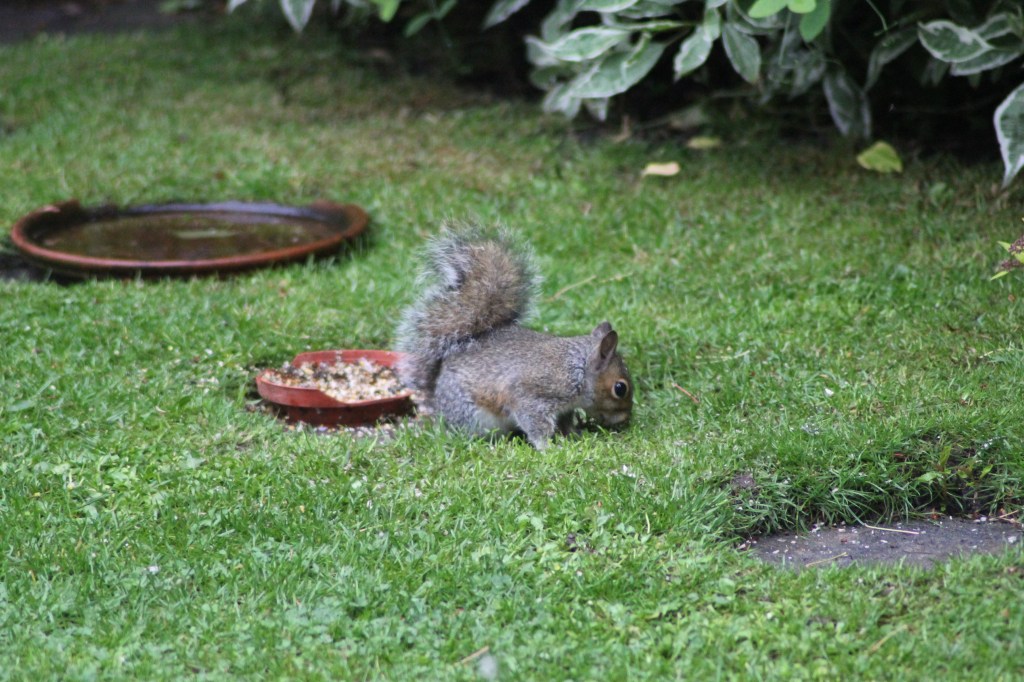
A grey squirrel not in the grounds of Macclesfield Hospital but in my garden (Photo: Alex Cropper)

Is it charismatic in my opinion? Yes I think so. Many people regards them as tree-rats who raid bird feeders and who are responsible for the demise of the Red Squirrel in the UK. The latter is unfortunately true (although blame should be placed at the Victorian’s feet really, the squirrels are being squirrels, they don’t know they are 3000 miles from home). To me they come across as an intelligent animal who performs death-defying leaps for the sake of a nut or an opportunity at a bird feeder. They are also undeniably cute at times too (sorry for putting human characteristics on them!). They’re like a pirate from an old yarn, will steal your lunch but will put a smile on your face whilst doing it.

Day 5 – Poa annua

Another day spent inside due to my cold (it’s getting better though, hurrah!) and I need to do some life admin that requires me to be indoors. So, my species is one seen the other day whilst on my plant hunt.

What? Annual Meadow-grass Poa annua L.

When? 2nd January 2020. Recorded and submitted as part of NYPH.

Where? Burton Drive, Poynton, Cheshire, VC58, UK.

Who saw it? Me

Is it larger than a blackbird? No, not really. Not the ones I saw at least.

What is it? An annual grass species. Common in meadows, as the English name suggests, and also a constituent of garden lawns.

Fact I learned about this species: It is very successful, it has even thrived in sub-antarctic islands. Also the genus name Poa means fodder.

This is me holding one against a lamp-post, exciting isn’t it?! (Photo: Alex Cropper)

Is it charismatic? No, oh god no. It’s one of the most boring grasses in existence, and grasses themselves as a whole are pretty boring. I’m no idea why I even picked this one to write about, I mean I barely wrote about it to be honest, not much I could find out really. I was actually going to go for a Bullfinch today but thought against it at the last minute as I’d done a bird yesterday. Still; it does/did feed a lot of livestock so in a way it’s also fed us down down the centuries.

Day 4 – Coal Tit

The cold’s not going away yet, feel as bad today as yesterday so no venturing into the countryside for me alas. Thought I’d explain the names of the species before today’s entry. So on Day 1 we had Woodpigeon Columba palumbus Linnaeus, 1758 and on Day 2 we had Groundsel Senecio vulgaris L. (I’ve admitted the subspecies name here for simplicity). The non-italicized name at the start is the British English name, the first italicized part is the genus and the second part is species name. Both the same in both the animal and the plant, a genus is a closely related group and the species is an individual of that group; there are other groups above genus but will keep it simple. Think of it as a manufacturer and model of a car; Ford Focus, the model Focus, being made by Ford. The next bit is where zoological classification and botanical differ. The Linnaeus of the Woodpigeon and the the L. of Groundsel are the names of the person (or authority) who assigned the name; in this case they are one and the same L. is a shortening of Linnaeus. In zoology the original authority is given and if the species has been assigned a different genus than the authority name and the year it was assigned are in parentheses (..). In botany the current authority is named and the year isn’t given. In this case Linnaeus assigned Groundsel to the genus we still use today (probably in a similar year to the 1758 of the pigeon).

Hope that’s made it a little clearer, or made it more complicated! Either way I like a bit of nerdy nonsense!

What: Coal Tit Periparus ater (Linnaeus, 1758) – someone else assigned a new genus after Linnaeus)

When: 4th January 2020, record submitted on eBird.

Where: Milton Drive, Poynton, Cheshire, UK

Who saw it? Me

Is it larger than a blackbird? No

What is it? A small member of the Tit family which shows a preference for conifers and evergreen trees. You will often see them in winter in the presence of other tits in mixed species aggregations. They are mostly grey and white with a black head with a diagnostic white stripe. Common in my garden throughout the year which has numerous evergreen species.

Fact I have learned about this species: The only breeding member of the tit family on Orkney; with a few pairs on Hoy. No blue tits or great tits breed there at all.

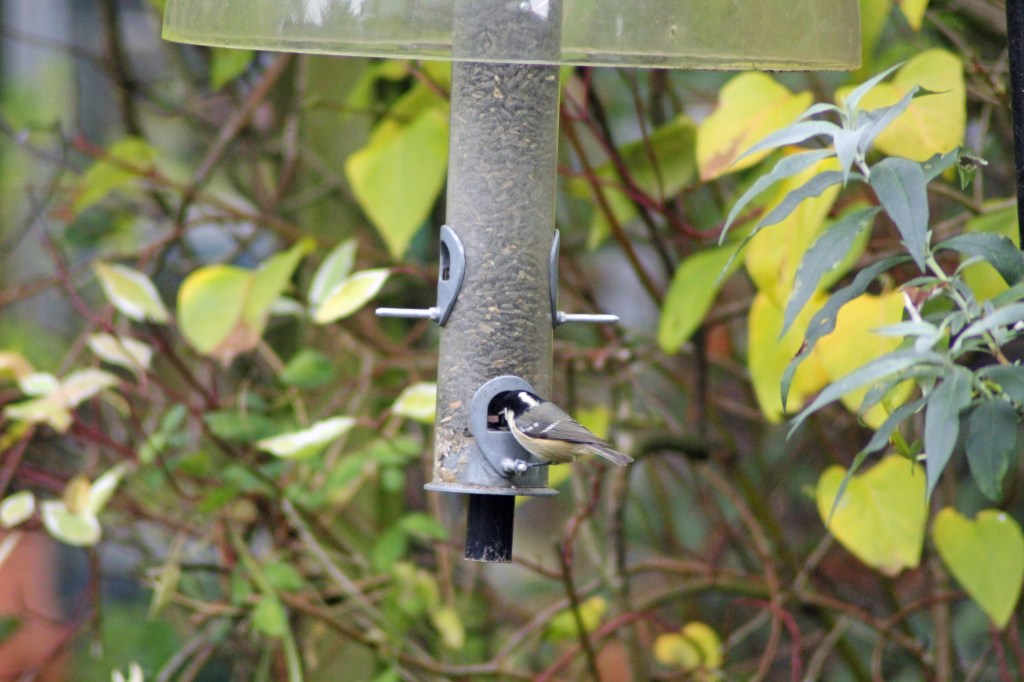
A Coal Tit seen on my garden feeder in 2014 (Photo: Alex Cropper)

Is it charismatic in my opinion? Yes I’d say so. Any member of the tit family is. This one has an endearing habit of taking a seed from the feeder and immediately taking it elsewhere to be eaten, whereas other birds just stay at the feeder to eat.

Day 3 – Iberian Threeband Slug

I thought today would be one of my plants seen yesterday. This is because I’ve been laid low by a cold, one of those colds that doesn’t creep up on you but sprints full on and you can’t stop it no matter how prepared you are. Hopefully it will pass as quickly as it hit; really hard to concentrate with a full on cold!. However, I thought I’d keep to writing about daily sightings for now to help carry momentum for this blog so I have just been out into the garden to look for some of the most unloved creatures there are.

What: Iberian Threeband Slug Ambigolimax valentianus (A. Férussac, 1822)

When: 3rd January 2020. Record submitted to iRecord (will explain what this is in a later post)

Where: Milton Drive, Poynton, Cheshire, UK

Who saw it? Me

Is it larger than a blackbird? Definitely not. It’s a slug.

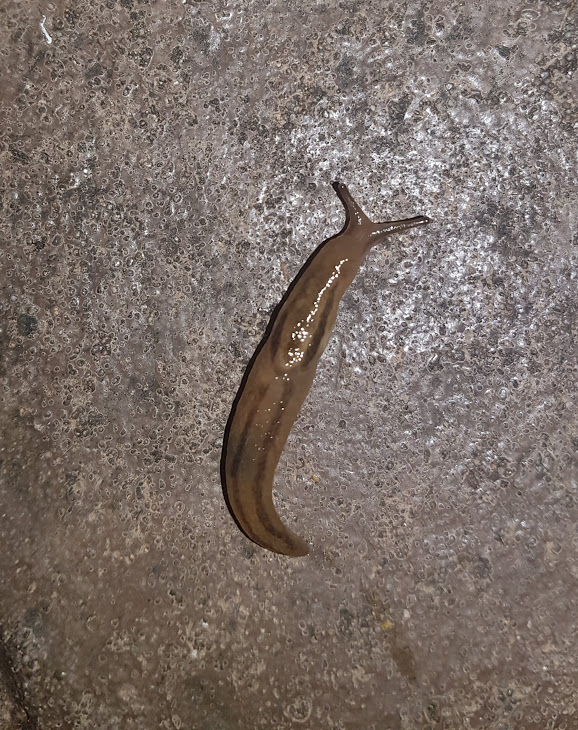
What is it? It’s a slug. Obviously. And a non-native to the UK one at that (as its name suggests). One with two parallel stripes along most of its body with a third on its saddle (the bit near the front of this slug that looks slightly raised) giving it part of the English name. Originally from Spain and has been accidentally introduced to the UK where it has spread modestly; has also ‘invaded’ other countries outside its native range (Rowson et al, 2014).

Fact I learned about this species: Gardeners hate slugs, definitely a known fact but not all of them eat plants, this one does however alongside breaking down waste. So useful and not useful to gardeners. And being a non-native species could out compete native species – but the evidence doesn’t exist to prove it with this particular species.

Is it charismatic? No. It’s a slug (in fairness some slugs around the world are charismatic, just not ones found in the island of Britain).

Ref: Rowson, B., Turner,J., Anderson, R., & Symondson, B. (2014) Slugs of Britain and Ireland FSC Publications, Telford

Day 2 – Groundsel

Yesterday’s postponed New Year’s Plant Hunt happened today. I went for a long (ish) walk around my home village/town to see as many species of plants in flower as I could. All this is part of a national scheme to see what plants are in flower in the middle of winter ( https://nyph.bsbi.org/ ). Obviously not masses. I saw seven species in flower, not bad for a non-botanist. The weirdest one was Marsh-marigold which really shouldn’t be in flower until late February or early March. But today’s species is another humble one.

What: Groundsel Senecio vulgaris subsp. vulgaris L.

When: 2nd January 2020. Record submitted using bespoke ‘app’ to the BSBI (Botanical Society of Britain and Ireland)

Where: Milton Drive, Poynton, Cheshire VC58 (This is a nominal ‘vice-county’ used as a permanent county that ignores political county boundary changes to give stability to botanical records throughout the years, VC58 refers to the historic country boundary of Cheshire, but not all VC’s do this, some split old counties into sections).

Who saw it: Me

Is it larger than a blackbird? No

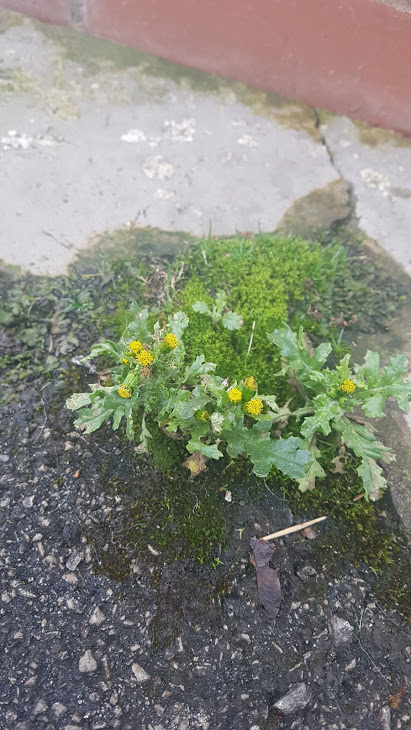
What is it? A small insignificant looking member of the daisy family. It looks a bit like a small dandelion or ragwort that ca’t really be bothered to flower properly. The petals seem to barely poke through creating a thick paint-brush effect. They appear to like growing out of the base of walls and in cracks in the pavement. A pioneer plant definitely (ie: one that colonises an area first). Their seeds are a lot like dandelions, white fluffy things that are transported on the breeze – and presumably end up in pavement cracks.

A fact I have recently learned about this species: The latin genus name of Senecio means ‘old man’ on the account of the seed head looking like a bald shiny scalp when after all the seeds have dispersed. So Senicio vulgaris when directly translated into English means Common Old Man (Mabey, 1996). Ref: Mabey, R (1996) Flora Britannica Sinclair-Stevenson, London

Groundsel (Photo: Alex Cropper)

Is it charismatic in my opinion? No. It grows half-heartedly in cracks in the ground in between cigarette ends, chewing gums, and dog do. Although you have to admire it’s tenacity.

Day 1 – Woodpigeon

Today was supposed to be a start with great intentions. Unfortunately New Year’s Eve put paid to it. Not through drink but rather I currently work behind a bar that didn’t close until 02:00am, I didn’t get home until 02:45 so I got up far too late for my intended New Year’s Day walk which would have been an attempt to do the New Year’s Plant Hunt; this will now be done tomorrow. So I had intended to start right out of my comfort zone and write about a plant. But no. Birds it is, a safe territory for me. Although my first bird of 2020 was a singing Robin at 02:40am on my way home from work my first bird seen of the day was a humble Woodpigeon. So that will be species 1. I will explain the technical details listed below (like the random name and date after the species name for example) on a later post.

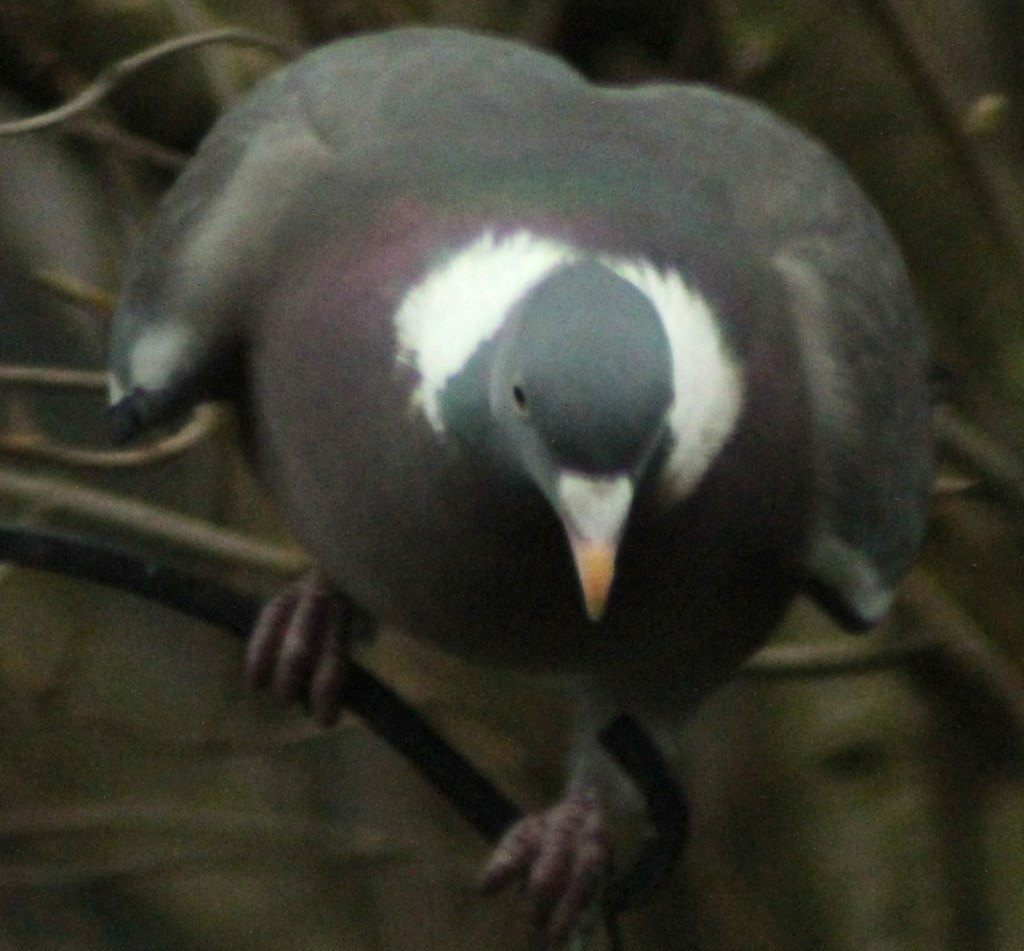
What: Woodpigeon (or Wood Pigeon) Columba palumbus Linnaeus, 1758

When: Seen 1st January 2020. Recorded using eBird.

Where: In my garden, Poynton, Cheshire, UK

Who saw it: Me

Is it larger than a blackbird? (My size measuring stick, similar to the ‘size of Wales’ or ‘Olympic sized swimming pool’ pointless size yardsticks) Yes it is.

What is it: One of the most common birds in the UK, certainly the most common pigeon species outside cities and can flock to huge numbers in some areas. Are seen as a pest to crops in agricultural areas where they eat seeds in huge quantities. Anyone with a garden bird feeder will know how much seed they can consume! (My dad hates them, he would rather have less fat prettier birds devouring seeds!). Only 3 in my garden this morning though.

Fact I have learned about this species: Can be legally shot in the UK at anytime of the year.

Not the greatest picture of a Woodpigeon! Still taken by me so I don’t have to draw one!

Is it charismatic in my opinion? Going to be harsh and say no. The best feature of them is the white stripe on the wings, making them easy to identify in flight. Otherwise they’re pretty bumbling, lazy birds (they’re nests are pathetic!)

A Species a Day…

Attempting to write about a species a day…

In this new blog I am going to attempt to write about a species per day. My target is to just write one per day in the month of January 2020 but I would ideally love to carry on throughout the year. Now, I know what I’m like, I start with good intentions and peter out when distractions happen (I am easily distracted!). So a challenging but obtainable of a month will be the first task.

I’m going to keep them short (to help me, and you reading them!), with the format being what is the species, where I saw it, a fact or two and a ‘visual representation’ of said species. I can’t really draw and some my camera doesn’t have a decent lens to capture more mobile creatures so it won’t always happen but I hope to have something to demonstrate it. For example this:

Which is of course a Starling (Sturnus vulgaris).

The species in question won’t necessarily be one I’ve seen that day; there will be days I won’t be able to get out, but hopefully one I’ve seen recently.

That’s it for now. Will start tomorrow (1st January 2020) and see how far I get.

Design a site like this with WordPress.com
Get started