Day 29 – Dunnock

Back to species that I have actually seen for real recently! This will be a rather shorter blog than normal as I’m running late for my work ‘Christmas’ party (I work in a bar, it would be stupid to have a Christmas party before Christmas!) but I still need to write a blog – can’t fail this late into my challenge! So here goes.. first bird I see in my garden is…

What: Dunnock Prunella modularis (Linnaeus, 1758)

When: 29th January 2020

Where: My garden, Poynton, Cheshire, UK

Who saw it? Me

How was it recorded? It hasn’t although my parents reported Dunnock from the same garden on Saturday (probably the same individuals).

Is it bigger than a blackbird? No, about the same size as a House Sparrow.

What is it? A small dowdy brown coloured bird with a greyish face and narrow bill. Feeds on the ground, so if you have bird feeders you won’t see them on the feeders themselves but they’ll usually be underneath hunting for the crumbs. They have a pleasing warbling type song which according to the book starts in January but the ones in my garden started singing on December the 23rd. Old-time naturalists (like Gilbert White) thought they were the very epitemy of a monogamous relationship, but in reality they are anything but, with males usually having a subordinate male (mistaken as a ‘loyal’ female in days gone by, the sexes are identical) to do his dirty work whilst he mates with as many females as possible.

A fact I have learned about this species: The genus name Prunella is shared, perhaps uniquely, with a genus of plants Prunella who are commonly known in the UK as ‘self-heals.’
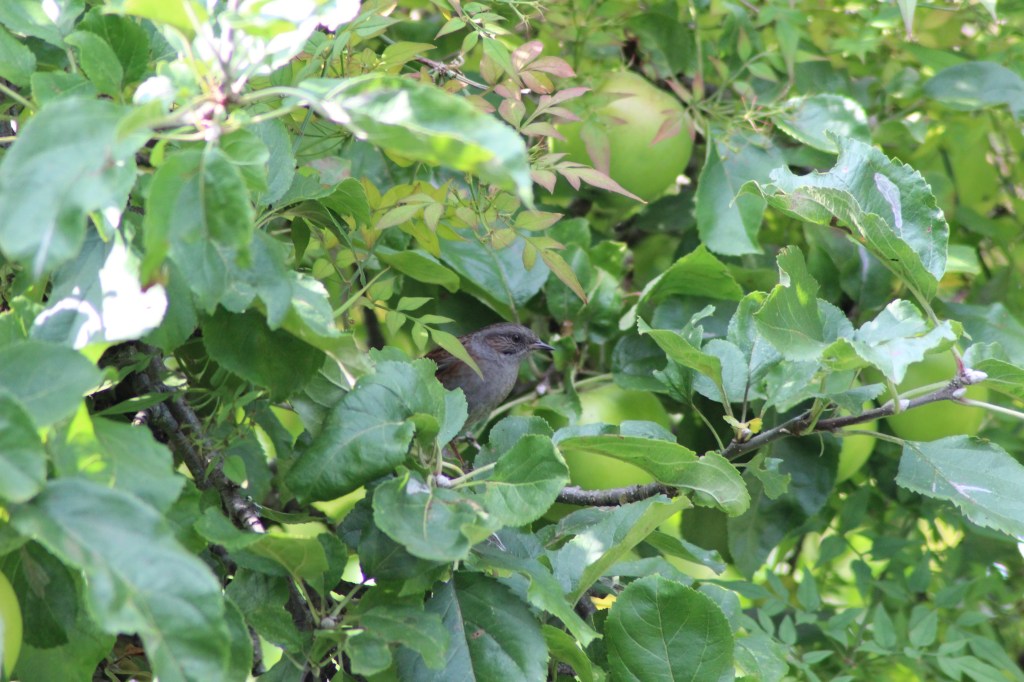
A lovely Dunnock in spring 2014 in my garden (Photo: Alex Cropper)

Is it charismatic in my opinion? On initial appearance no. They were the most boring bird in the garden, once being known as ‘hedge sparrows’ rather than having their own name (they are unrelated to sparrows). But now knowing what they get up to in the spring time makes up for it, and they have a great song, so yes they are.
Day 28 – Tufted Titmouse

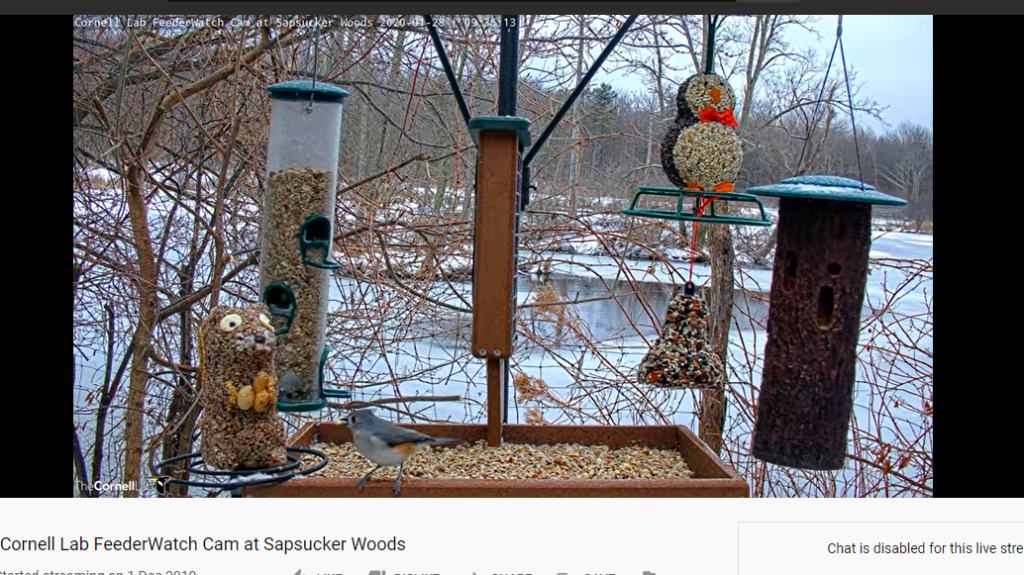
Something a little different today as it’s a species I’ve never seen in the flesh and wasn’t aware of its existence until today! I’ve been watching a few YouTube webcams of bird feeders in America and had no idea what birds were frequenting them which hadn’t bothered me as I quite like the idea of not knowing things (there is so much to learn about in this world!). But I thought today I’d see if I can get at least one of them identified. My physical bird total for the USA is two species, both seen during a layover at Miami Airport in 2018, a House Sparrow, which even now are singing in my garden in the UK as I write this, and a bird I had to jot down and do a crude drawing of; this turned out to be a Boat-tailed Grackle. My knowledge of American birds is pretty terrible. So, a challenge. And I hope I’ve got the ID right!

What: Tufted Titmouse Baeolophus bicolor (Linnaeus, 1766)

When: 28th January 2020

Where: Somewhere called ‘Sapsucker Woods’in New York, owned by Cornell Ornithological Lab.

Who saw it? Me on YouTube and whoever else was watching the livestream.

How was it recorded? It wasn’t. I wasn’t physically there to see it.

Is it bigger than a (European) blackbird? No, according to my book (Sibley, 2003) it’s 6.5″ long (16.5cm) whereas a a blackbird is between 9″ and 11″ (23cm – 29cm) long.

What is it? An endemic (which means occurs in here and nowhere else), or almost so, bird of central and eastern USA. It is grey/blue in colour with a noticeable dark black eye, a crest on its head and a orange patch under the wings. Lives in deciduous woods and in non-migratory, seems to frequent bird feeders.

A fact I have learned about this species: All the above facts are new to me! It’s loosely related to Eurasian Tits (Blue tits, great tits etc.).

The bird in question, seen on this livestream: https://www.youtube.com/watch?v=N609loYkFJo on 28th January 2020

Is it charismatic in my opinion? Not a clue. If it’s anything like the Tits I see in the UK then probably. My American readers would know more for sure!

Day 27 – Great Crested Grebe

Another ‘great’ bird. I think this last week will be mostly about the birds; they’re my specialist area and gives a nice run up to until Friday, my last post of the month. This one is from my local patch again. There wasn’t too many birds around today, nothing unusual or great in number; probably due to contractors felling a tree causing temporary disturbance. A tad frustrating but it gives me an excuse to go out later in the week.

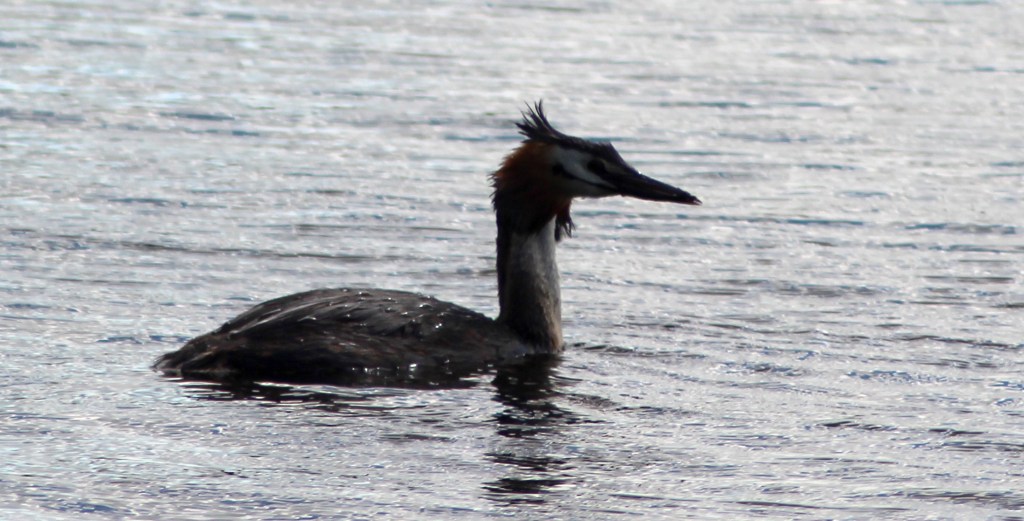
What: Great Crested Grebe – Podiceps cristatus (Linnaeus, 1758)

When: 27th January 2020

Where: Poynton Pool, Cheshire, UK

Who saw it? Me

How did I record it? On eBird (using the app)

Is it bigger than a blackbird? Yes, though hard to judge as grebes spend most of their lives on the water so half their body is underwater.

What is it? A medium-sized duck-like bird that lives in many lakes in the UK. It doesn’t really migrate in this country, but may move around to other water-bodies in the winter away from their breeding areas. They have an endearing habit in the spring and summer of giving their young ‘piggy-backs’ so you will often see an adult bird with a stripey little passenger swimming around. At this time of year they will start their courtship with seemingly carefully choreographed routines which often involve the exchange of a ‘gift’ of pond weed. They almost became extinct in the UK during the 19th Century due to the fashion for having bird feathers in ladies hats with grebe feathers being particularly popular. The last stronghold was my home county of Cheshire, where half the tiny population survived. They have since recovered and are now a common site on lakes. The unofficial county bird of Cheshire is the Great Crested Grebe.

A fact I have learned about this species: Their closest living relatives (grebes in general) are flamingos (Ref: Chubb 2004, link: https://www.sciencedirect.com/science/article/abs/pii/S1055790303001593?via%3Dihub)

One I saw on a trip to Somerset a few summers ago (Photo: Alex Cropper)

Are they charismatic in my opinion? Yes. And enigmatic. Unlike most waterfowl you never see them on land, ever. But they are highly visible but seemingly just out of reach. Just watch their courtship dances and their care for their young. Brilliant.

Day 26 – Great Spotted Woodpecker

This weekend is the RSPB’s Great Garden Birdwatch 2020 where every year people up and down the UK spend an hour noting down what birds visit their gardens. This year, my parents surveyed our back garden (I still live with them, please can I get a permanent job in conservation or ecology so I can move out, pretty pleeeeeease?!) and it gives them a chance to practice their bird watching skills and to knowing what species visit. So with this in mind I’ve picked one of the birds they saw yesterday during their survey.

What: Great Spotted Woodpecker Dendrocopus major (Linnaeus, 1758)

When: 25th January 2020

Where: My garden, Poynton, Cheshire, UK

Who saw it? My parents

How was it recorded? On the RSPB’s Big Garden Birdwatch survey.

Is it bigger than a blackbird? About the same, maybe a little smaller.

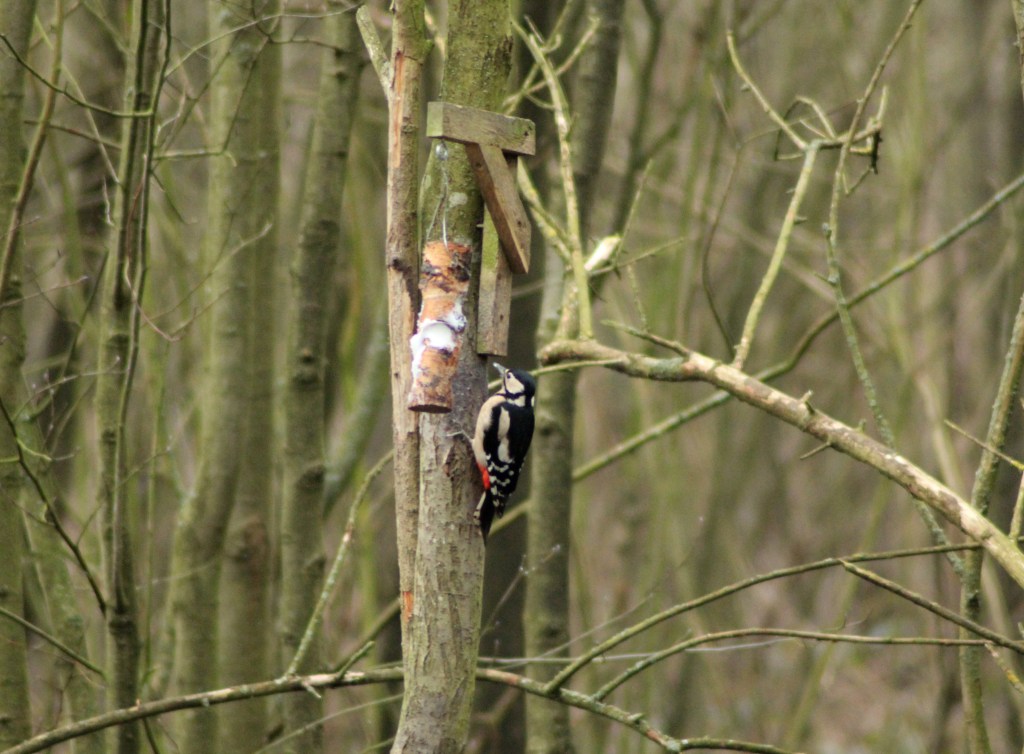
What is it? The UK’s commonest species of woodpecker. An occasional but increasing visitor to garden bird feeders. They are black and white with the males having a red stripe at the back of their head and both sexes having a red lower ‘waist.’ They are one of the few species to be increasing in number in the UK (compare this to the closely related Lesser Spotted Woodpecker D. minor which has crashed dramatically). They make a distinctive hammering noise in the spring and give a high-pitched squeaking call as they fly in their bouncing manner. They mostly eat insects but will eat seeds and nuts too (hence visiting bird feeders).

A fact I have learned about this species: Have recently colonised Ireland; a country/island which has previously had no species of woodpecker at all.

A lady great spotted woodpecker pictured at Moor Nature Reserve near Warrington a few years ago (Photo: Alex Cropper)

Is it charismatic in my opinion? Yes, all woodpeckers are surely? They always brighten my day up and their drumming in spring is so evocative.

Day 25 – Gorse

I thought I’d write about something a little more appealing than an earthworm or a tiny thing that lives in a bramble leaf (they may be unappealing but I like the small and/or unpopular stuff), so I’ve decided on a plant today, maybe a bird tomorrow and save some more obscure things for later next week.

What: Gorse Ulex europaeus L.

When: 25th January 2020

Where: Jackson’s Brickworks Nature Reserve, Cheshire (VC58), UK

Who saw it? Me

How did I record it? I haven’t yet although I did record gorse from my New Year’s plant hunt from the same site on 2nd January.

Is it bigger than a blackbird? Yes, it’s a bushy shrub.

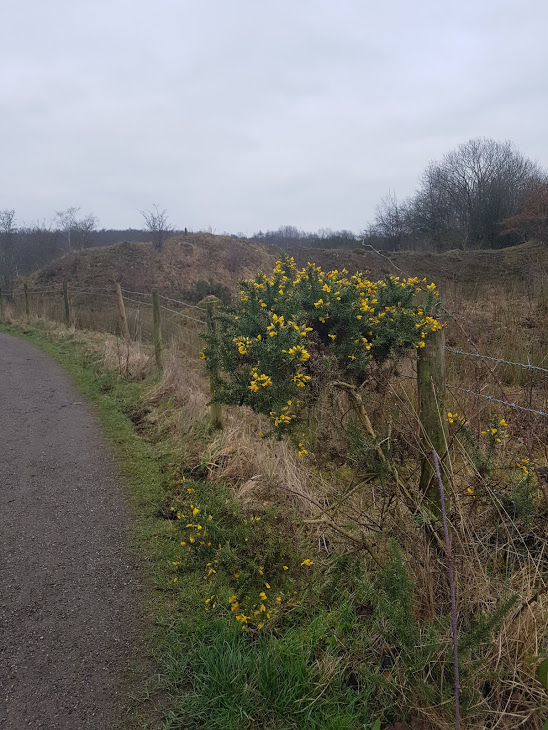
What is it? An evergreen spiny shrub which seems to live just about everywhere; particularly in areas of scrub. The plant is seemingly perpetually in flower, even in the darkest winter months, leading to the phrase “if the gorse is out of bloom, than kissing is out of fashion.” Obviously kissing is always in fashion (apart from when you’re me!) so gorse is always in flower. Why a plant spends its energy to be flowering when there’s no hope of pollination is anyone’s guess. Maybe they take advantage of brief mild periods in winter when a bee may temporarily emerge from hibernation and give them a source of nectar (and pollen)?

A fact about this species I have learned: Apparently, according to Maybe (1996 – Flora Britannica) the reason gorse is alwys in flower is that most large patches are a mixture of Common Gorse Ulex europaeus and Western Gorse U. gallii which flower at different times of the year, the former flowering between January to June and the latter from July to November.

Gorse Ulex europaeus (Photo: Alex Cropper)

Is it charismatic in my opinion? Yes, of gorse it is (sorry…). It has a lot of folklore attached to it (according to my book) and has been used as a good source of firewood in the past. They are useful in encouraging early season pollinators; I saw my first bumblebee of 2019 on gorse last February. And you try falling into a gorse patch like I did on the Isles of Scilly a few years ago, not an experience you want to repeat, the spines get everywhere!

Day 24 – Common Earthworm

An early post today – got to work in a couple of hours so no real time to explore and write. Remember a week or two ago when i said I was going to try a new technique to try and find some wildlife? Well, I did it on Tuesday. I got some dried mustard powder, mixed it with 2 litres of water and poured into a small square of lawn. Why? To survey earthworms. There are quite a lot of species in the UK, and because they live underground we barely see them, usually they are in the beak of a bird. I thought I’d try and ID some. You can only do this by euthanising them, straightening them and then putting them in IMS, and then using a lens or microscope to count segments and find features – no wonder not many people know what they are!

What: Common Earthworm Lumbricus terrestris Linnaeus, 1758

When: 21st January 2020

Where: My garden, Poynton, Cheshire (VC58), UK

Who saw it? Me

How did I record it? Using a technique called ‘vermifuge’ and uploading the identified sighting to iRecord.

Is it bigger than a blackbird? No, blackbirds eat these. Although they are big for a worm, mine was over 20cm (200mm).

What is it? An earthworm, a very stereotypical earthworm, maybe the typical earthworm. According to Wikipedia they are the largest native earthworm species in most of Europe. They are reddish, brown in colour. That’s about it, it’s an earthworm.

A fact I have learned about this species: In some areas of Europe they are becoming endangered as they are being eaten by two invasive species of Antipodean flatworm, the New Zealand Flatworm Arthurdendyus triangulatus and the Australian Flatworm Australoplana sanguinea.

A visual representation: My mum has real phobia of worms for some reason and I know she reads this so I won’t put a picture up. But surely you all know what an earthworm looks like? They mostly all look the same…

Is it charismatic in my opinion? No, it’s a worm. They provide food for birds, and do an incredibly important job for the soil, eating a lot of detritus but they aren’t really charismatic in my opinion.

Day 23 – Stigmella aurella

Today’s one is a hard sell, it doesn’t even have an English name. Or least an English name that anyone uses. I find outside of the big and bold a lot of experienced folk prefer to use the scientific (or Latin, but it’s not really Latin) name. I’m fine with it some cases (the more obscure stuff) but less so in more common or familiar wildlife. I find scientific names can put people off wildlife and provide a barrier to future learning. Botanists could quite easily use the English (or your local name) instead of scientific, the same with some entomologists (those who study insects). I encountered one person online who insisted on using the latin/scientific name only for the larger moths, despite these moths having well established and memorable names. But I also understand the argument that a scientific name means the same thing wherever you are in the world; it doesn’t change, whereas the common names do, between languages or even within the same language, and many aren’t helpful in identifying something. Anyway, on with the show.. An insect mine like the Ivy from a few days ago.

What: Stigmella aurella (Fabricius, 1775) – (has the tentative English name of Golden Pigmy)

When: 22nd January, 2020

Where: Jackson’s Brickworks local nature reserve, Cheshire (VC58), UK

Who saw it: Me

How was it recorded? Noted down on a spreadsheet and it will be sent off at the end of the year.

Is it larger than a blackbird? No, it’s a small moth.

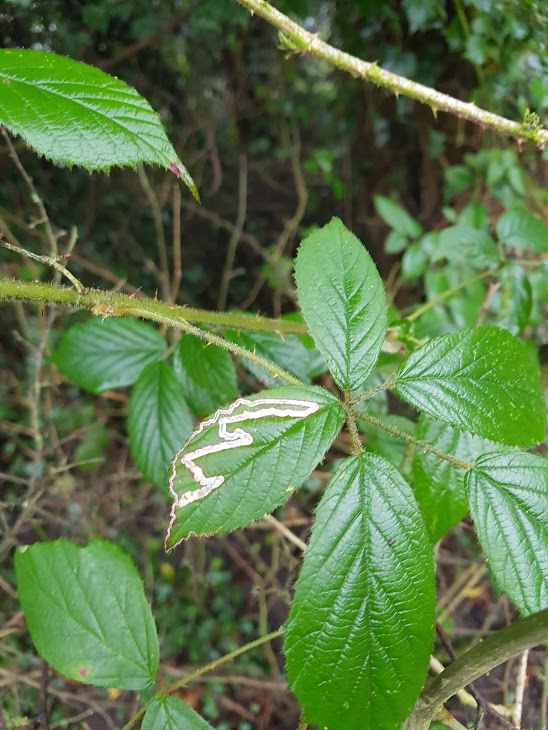
What is it? A tiny moth whose larvae live in the leaves of bramble (Rubus spp.) and avens (Geum spp.). The larva are really easy to spot, leaving distinct trails within individual leaves. As brambles keep their leaves all year round they are one of the easiest leaf-mining moth species to be found in the winter months. The adults are very rarely seen, but have metallic purple/black wings with a horizontal white stripe two-thirds down the wing.

A fact I have learned about this species? Despite appearing on nearly every bramble bush they seem to be slightly under recorded; probably as not many people will know what it is. They are found throughout Europe.

Stigmella aurella (the white line within which a larva lives and eats) (Photo: Alex Cropper)

Is it charismatic in my opinion? No idea, don’t know too much to say one way or the other.

Day 22 – Downy Birch

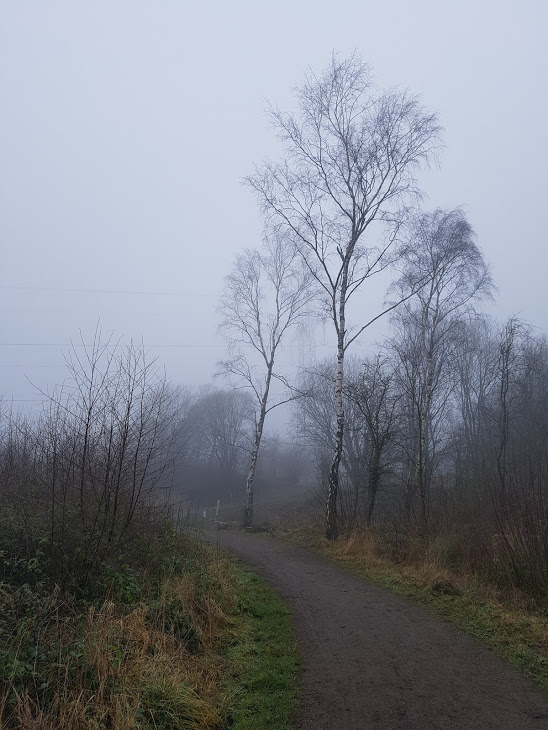
Afternoon to my dwindling readership! (As I’ve said before this is all about me getting into the habit of writing something every day and making it a routine, I’m not that bothered about readership, but I love it when folk do read this.) Today has been incredibly foggy in my patch of planet so things have looked eerie. Birds have been more obliging and I even saw a sleeping fox which was in the middle of a meadow, fog makes animals see less too. But today’s species is a plant again, and my first species where I may have got the ID wrong as it’s a difficult one to separate from its close relation.

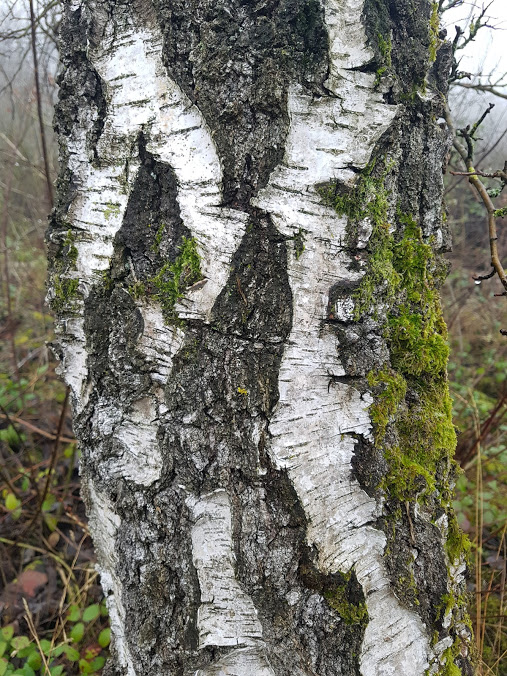
What: Downy Birch Betula pubescens Ehrh.

When: 22nd January 2020

Where: Jacksons Brickworks Local Nature Reserve, Cheshire (VC58), UK

Who saw it? Me

How have I recorded it? I haven’t yet as I’m not sure of the correct ID, will maybe wait until it comes into leaf later in the year.

Is it larger than a blackbird? Well obviously, it’s a tree and I saw a blackbird sat in one.

What is it? Possibly a downy birch, or a silver birch (B. pendula). I’m coming down on the side of B. pubescens as according to my book (Johnson & More (2004) Tree Guide: The Most Complete Guide to the Trees of Britain and Europe HarperCollins, London) B. pendula has ‘weeping’ branches whereas the tree I’ve seen has not, but it’s hard to tell in winter. The book also says B. pubescens is more widespread on poor damp non-chalky soils, which is precisely the habitat this one was in. But if anyone knows better than please let me know! – Anyway, both birches are trees up to about 30 m, are short lived for trees and are pretty weed-like for trees, they often crop in places you don’t want them too. This is due to the tiny seeds which get everywhere, these seeds colonise new areas which is why they are often the first tree to be seen in a habitat; they are one of the first trees to form a successional woodland (an ecology lesson for another day!).

A fact I have learned about this species: They hybridize commonly with ‘exotic’ birch species, ie: non-native garden introductions (Johnson & More, 2004).

Is it charismatic in my opinion? As far as an immobile plant can be, yes. I like pioneer species; true they can be pain in the backside for rangers and land managers to get rid of but I like the tenacity of them.

Day 21 – Collared Dove

Definite writer’s block today. Barely thought about writing today and when I did I had no idea what to write about. I have some backups to write about but I’m going to save them I think. So I’ve looked out of my window for a subject and the first bird I saw (which I haven’t written about yet) is this one..

What: Collared Dove Streptopelia decaocto (Frivaldszky, 1838)

When: 21st January 2020

Where: My garden, Poynton, Cheshire, UK

Who saw it: Me

How did I record it? On eBird.

Is it larger than a blackbird? Yes, though not by much.

What is it? A relatively small member of the pigeon family. Grey/pink in colour with a black collar around the back of it’s neck – bit not on the front. Has a distinctive three syllable call reminiscent of a football fan lazily chanting “U..ni..ted, U..ni..ted.” Pretty common in gardens in the UK and incredibly common in other parts of Europe.

A fact I have learned about this species: It’s original home range was temperate and sub-tropical Asia but during the 20th century it naturally expanded its range when it colonised Europe; they first bred in the UK in 1955. They have been introduced by humans to North America.

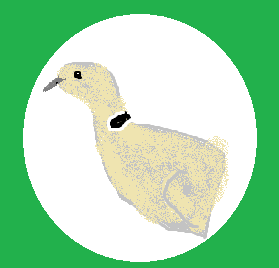
I think you’ll agree, this is a pretty accurate representation of one! (Of course, a Paint special!)

Is it charismatic? Like the woodpigeon on Day 1 i’m not sure. It certainly doesn’t hog the bird table like it’s larger cousin for one; but it’s pretty stupid nevertheless – their nests are laughable. They are highly successful though and have conquered Europe from Asia better than Genghis Khan ever did. So they probably are charismatic on reflection.

Day 20 – Wigeon

I have a local birding patch; i.e an area local to where I live that I go on a regular basis to bird-watch. I recommend we all have one. After a period of time you gradually know what lives locally and what doesn’t and at what time of year, it also provides a great excuse to get out and have a walk. So when something unusual turns up, but something that maybe incredibly common somewhere else, it turns into a highlight or rarity. Which is the case of today’s species; not a rarity nationally or even uncommon but pretty scarce where I live; I saw hundreds of this bird during my survey near Preston Docks last week for the consultancy.

What: (Eurasian) Wigeon Anas penelope Linnaeus, 1758

When: 20th January 2020

Where: Poynton Pool, Cheshire, UK

Who saw it: Me and another birder (and reported to me by a third – that’s another thing about a patch, you can chat with other local wildlife enthusiasts)

How did I record it? On eBird. There was 4 individuals, 3 female and 1 male.

Is it larger than a blackbird? Yes. It’s about the same size as a mallard.

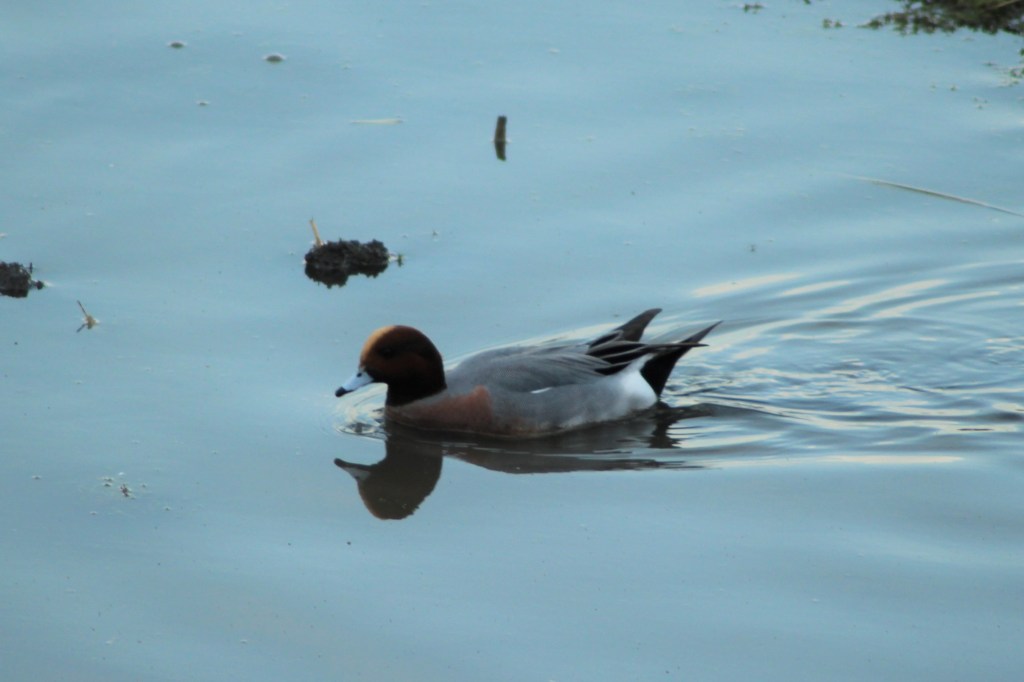
What is it? A dabbling duck (one that feeds on the surface rather than diving for its food). The females are a brown colour (like most species of duck) with a white belly, whilst the males are mottled grey/silver on the body and wings with a russet red head and neck with a noticeable yellow forehead. They make a whistling noise rather than a quack. They like to spend a lot of time out of the water to feed, but today’s birds were in the middle of my local lake.

A fact I have learned about this species: They are a comparitively rare breeder in the UK and Ireland, their numbers are augmented by a huge influx from elsewhere in Northern Europe. This influx has increased over the last forty years or so (Ref: Balmer et al (2013) Bird Atlas 2007-11: The breeding and wintering birds of Britain and Ireland BTO Books, Thetford)

Didn’t think I had a picture of a Wigeon but I have! – Taken at Old Moor reserve, Yorkshire in 2014 (Photo: Alex Cropper)

Is it charismatic in my opinion? Yes, all ducks are! I love the way they whistle to each other, definitely sounds like they are having a conversation.

Design a site like this with WordPress.com
Get started