Another murky day, I did venture out however to do an errand. I seriously can’t remember seeing any wildlife at all today though. There’s been a few birds in the garden, all of which I’ve written about before, but I’m not willing to use my get out clause of this being a separate list just yet! But I will use a cop out anyway as I pass this species pretty much every day.
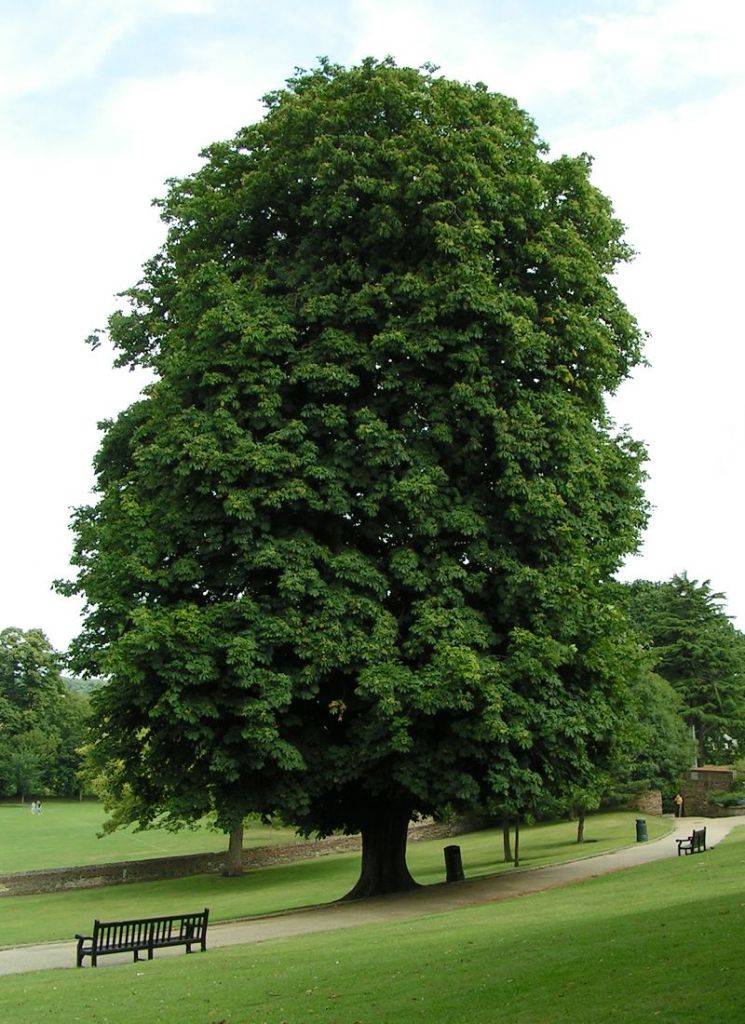
Horse ChestnutAesculus hippocastanum L.
A very common non-native tree here in the UK. Can grow tall, up to 30 metres in height. I walk by one every day in my home town. There is a mature tree growing right outside the post office, in the middle of the pavement no less. In fact when they re-did the pavement a few years ago they made sure it went around the tree. Better than taking it down altogether (which they normally do to mature street trees in my home town). Horse chestnuts produce the familiar conkers which kids used to collect (someone said they don’t now which is a shame). Despite being non-native (they are native to the Balkans) they are not invasive and don’t appear to out compete or interfere with native wildlife.
The weather has been mirky and uninviting. I wanted to go out and cycle ride somewhere but I would have got wet. So instead I drove to a local wildlife spot which is a flooded field. But alas, the temporary lake is getting smaller and smaller so nothing of note was there (and it was raining, and I could barely park) so I turned around and came home again. But all is not lost as I have a backlog of things I have seen throughout the year as backup.
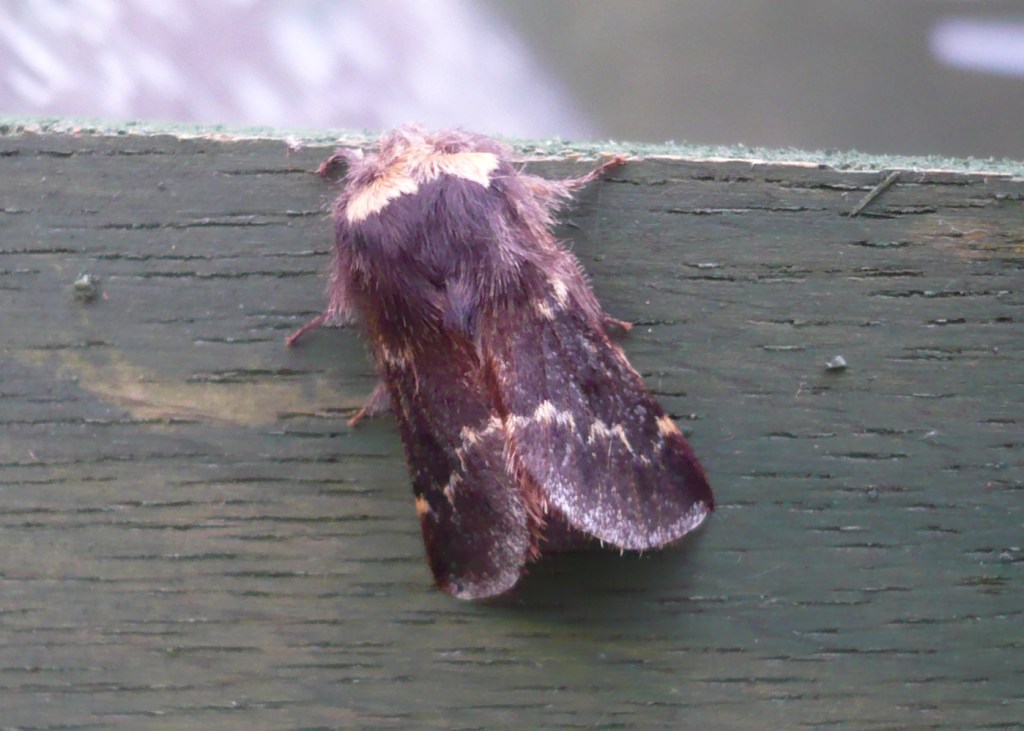
December Moth Poecilocampa populi (Linnaeus, 1758)
A dart shaped moth which is on the wing (as in, it’s in its adult form and is active, as opposed to hibernating) at this time of the year, one of the few moths to be active during the winter. The adults don’t feed, their only purpose is to mate. An interesting survival strategy. One turned up in my moth trap on the 23rd of November.
December Moth, this one was in my trap in 2014 (Photo: Alex Cropper)
A little different and a chance to motivate myself to write every day again. I came across a website which gave out a challenge of recording a species every day in the advent period (1st December – 25th December) which would then enter you into a prize draw if you managed it. Unfortunately I don’t live in the area of the country where this prize was being offered but it did inspire me to record (or at least write about) wildlife species in the run up to Christmas. So here goes (and it gives me an excuse if I double up on species!). I won’t write to my usual length but will highlight what I have seen on the given day.
1st December:
I have seen 24 species of bird today during my walk around the park in Poynton, Cheshire, UK. And the one I will highlight is…
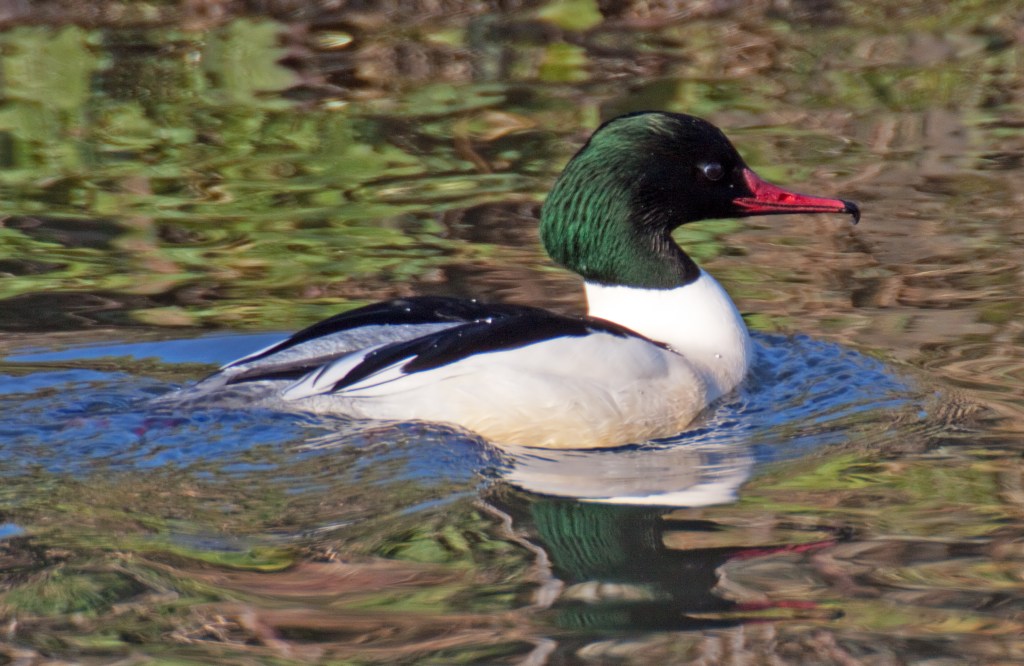
Goosander Mergus merganser Linnaeus, 1758
This is a fish eating duck, also known as the Common Merganser in some parts of the world. A regularly occuring duck on the lake in my local park over winter, but has been uncommon this autumn/winter so far.
Male Goosander (females have red/brown heads) – Photo: Tony Hisgett (via Wiki Commons)
It’s unseasonably mild here in my bit of the UK (not warm though!) with the overnight temperature last night falling to 11 C (double it and add thirty for a rough figure in Fahrenheit). There was no wind, barely any rain and good cloud cover, so a great night to survey moths in late autumn. I have written about this before but one of the best ways to survey moths is to leave a light-trap out overnight which moths are attracted to and then fall into (there are other cheaper ways of doing this such as leaving a light on in a room in your house with the window open and catching anything that may come in). Anyway, that is how I did it last night. I wasn’t expecting a lot due to the time of year but was pleasantly surprised when a handful were waiting for me when I checked the trap this morning, including the subject of today’s post.
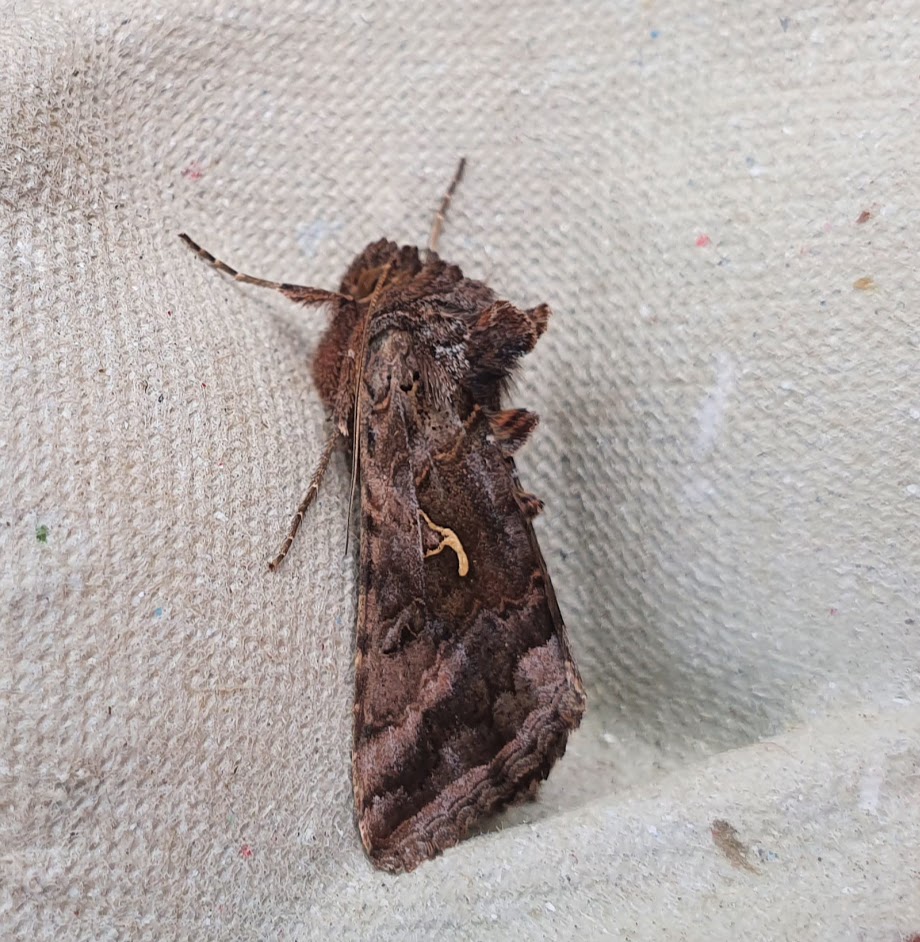
What: Silver Y Autographa gamma (Linnaeus, 1758)
When: 9th November 2020 (The date is always recorded as the day you put the trap out, not when you checked it).
Where: My garden, Poynton, Cheshire, UK
Who saw it? Me
Rough translation of scientific name: Autographa gamma – Written gamma (third Greek letter). Or written lower-case gamma more specifically.
What is it? A very common moth which can be found in the UK in practically every month of the year, but more often between late spring and early Autumn. However, unlike many moths found in my garden this moth is an immigrant, it, or it’s direct parents or grand-parents were. It (or they) would have made their way from southern Europe where the species is resident. Why some of them choose to migrate north is unknown to me, but they do so very regularly; I’m no idea if they go back again! Some may directly migrate north and find their way to our shores but they probably breed on the way, so the next generation takes on the baton and continues the journey.
Anyway, it is a fairly large moth with the forewing measuring up to about 20mm and is variable in colour although it is usually a degree of grey or brown, but always with a metallic silver ‘Y’ shaped marking, giving it both it’s English name and Scientific name, with the lower-case gamma being very similar to the lower case ‘y’ in the Latin alphabet.
Is it charismatic in my opinion? Probably, it certainly stands out with the ‘Y’ marking, and you know it has travelled far to get to you. It’s a good moth to learn when starting out too. But they are very common, but I think we need to appreciate the common as much as the rare in my opinion.
The very Silver Y in my trap this morning (Photo: Alex Cropper)
Been a while! As England is now in lockdown (again) I thought it would be a good idea to continue with my blog. I will try and write every day again. Got the advantage of no work to do (my contract for my Ecologist job ran out 3 – 4 weeks ago), so got some free time. So instead of going stir-crazy I’m doing things I’ve been meaning to do, or doing things to keep my mind from imploding. I don’t think I’ve written about this species before so this is a good jump-off point, and it has a great name!
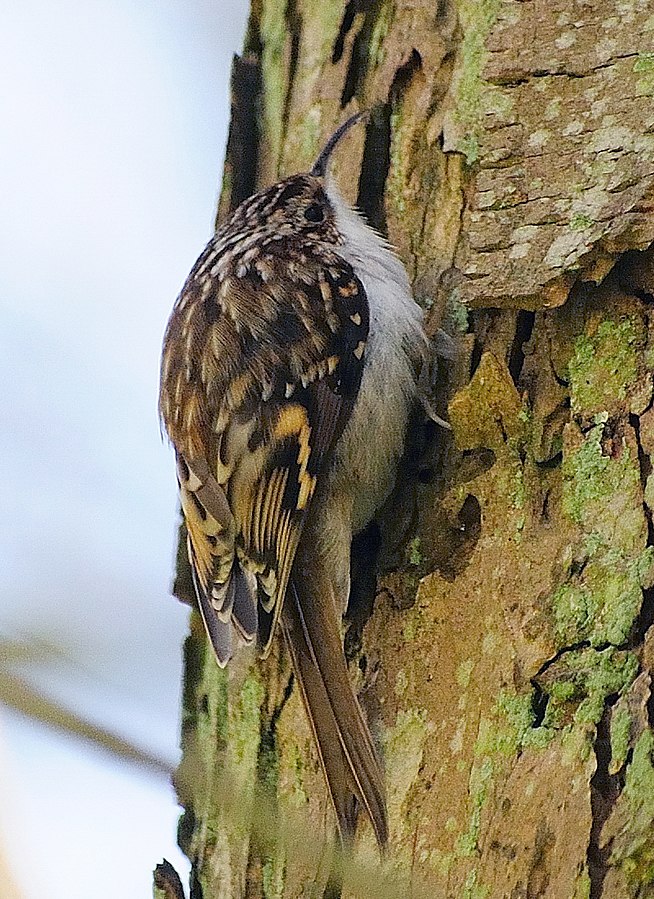
Actually, the name is one of the most descriptive of all British bird names as it sums up the behaviour nicely, they climb slowly up tree trunks looking for food, invertebrates mostly, get to the top and fly to the base of the next tree and begin again. They always go up and never down. They are a small bird, about the size of a blue tit (or chickadee if you’re American) with mousy brown feathers on top and white feathers below. Not only do they have mousy feathers but they almost look like mice full stop, admittedly without a tail and with wings. They have a hunched posture and a comparatively long curved beak, bringing to mind the long snout of said mouse. At this time of year you may find them amongst flocks of other small birds such as Blue Tits, Great Tits, Coal Tits, and Nuthatches (commonly known as ‘mixed tit flocks’).
A fact I have found out about this species: The scientific name directly translates as ‘familiar small tree-dwelling bird.’ A very boring name if you ask me!
Is it charismatic in my opinion? Enigmatic certainly. You very rarely see them but they are apparently common. They blend in with tree trunks almost perfectly and have a habit of climbing tree trunks on the opposite side of where you are observing from; it’s as if they know they’re being watched and are deliberately being awkward by hiding away, you can walk round the tree trunk to see where they have gone only to find it has gone to your original side.
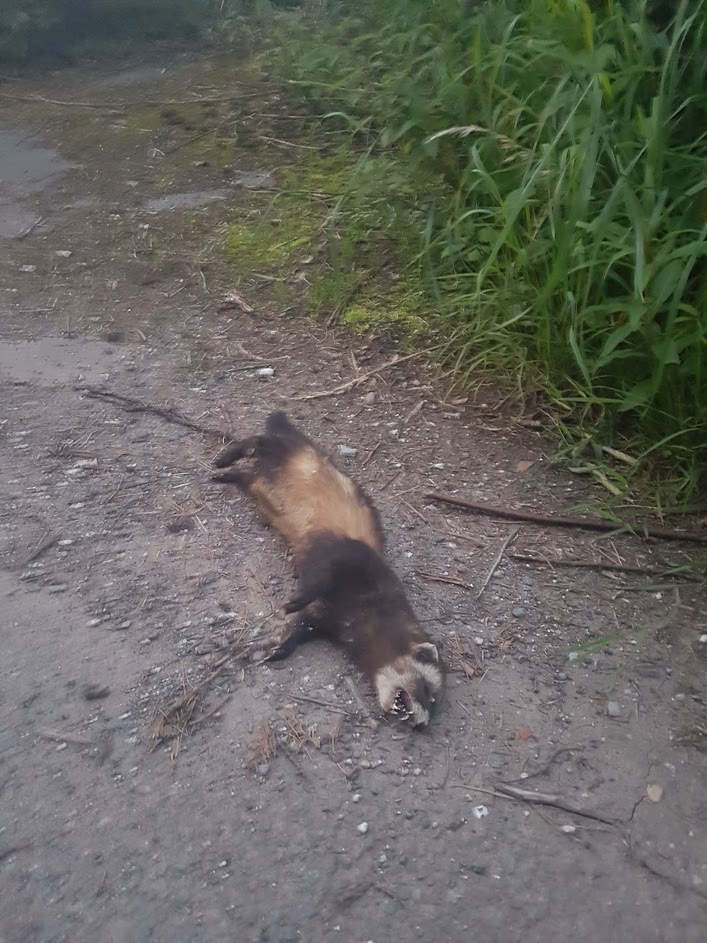
Over two weeks since my last one. Not good! So, anyway. There have been a lot of bats in my life recently, both professionally and personally. I survey bats for a living (amongst other things), and I’ve started to survey bats in my own time for an official voluntary scheme. This scheme involves surveying bats in a pre-assigned 1km square twice in July, using a bat detector to find pipistrelle and noctule bats. I’ve done it once already and will be doing my 2nd and last walk before the end of the month. However, the most interesting thing I found on my walk as I surveyed the bats was not a bat but rather some roadkill…
What: Polecat Mustela putorius Linnaeus 1758
When: 12th July 2020
Where: Woodford, Greater Manchester, UK
Who saw it? Me
How was it recorded? I submitted the record to iRecord where it was confirmed as a Polecat.
Is it bigger than a blackbird? Yes, it would eat blackbirds given half a chance. Ferret sized (there’s a reason for that!).
What is it? A mammal in the mustelid family, which includes, stoats, weasels, otters etc. And like those it is long and thin, but bulkier than weasels. They are black and tan in colour with a raccoon-like mask on their face. They are essentially the wild form of the ferret (or is it that a ferret is a domesticated polecat?) and the two readily inter-breed to form hybrids, which are often indistinguishable from pure polecats without genetic testing (which does give my sighting doubt as a pure polecat, despite the confirmation). They were almost hunted to extinction in the UK but have recovered since the First World War to an extent, they are still persecuted despite now being fully protected however. They feed predominately on rabbits in summer and on rats in the winter but are notorious opportunists so will prey on many other species including domestic ones, often bringing them into conflict with humans. They also stink, like most mustelids they create a scent to mark territory, the polecat’s is particularly pungent apparently!
A fact I have learned about this species: To be honest most of the above is new to me as polecats are a lesser known mammal in the UK. But, it was once known in Britain as a ‘foulmart’ due to it’s pungent smell. The pole in polecat come from French, no idea where the cat bit comes from as it isn’t a cat nor looks like one!
Roadkill (I think) Polecat – look at those teeth! (Photo: Alex Cropper)
Is it charismatic in my opinion? No idea, I’ve never seen a live one. I would guess so as most long thin mustelids are full of personality.
As I check my great-crested newt traps for newts (which are removed to somewhere safer which won’t be developed), which forms a large part of my job, I occasionally come across small mammals, often they are under carpet tiles which they lie to hide under (as do the newts, hence why they are there!) and immediately run away from as I flip the tiles up. Very occasionally they end up in the buckets. This was the case this morning when today’s subject turned up. I do have a history with small mammals, I have spent many an hour ‘removing’ (in this case removing them to another plain) rats from small islands in order to preserve specialist island species, so to accidentally trap mammals in my current job brings back some memories.
What: Bank Vole Myodes glareolus (Schreber, 1780) – I am willing to be corrected, going off my field guide for the ID.
When: 28th June 2020
Where: Winsford, Cheshire, UK.
Who saw it? Me.
How was it recorded? Noted down and sent to my employees for their site records.
Is it bigger than a blackbird? No, it’s a vole. Mouse/hamster size.
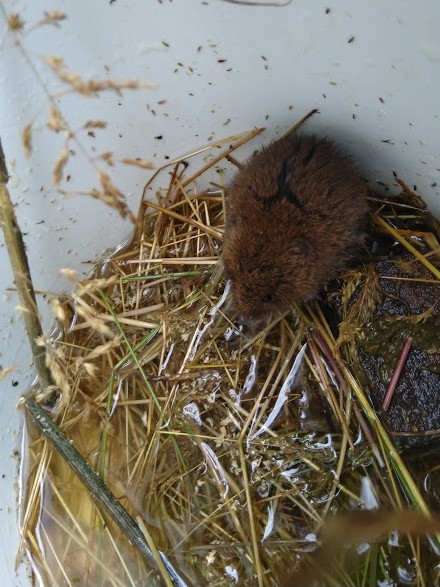
What is it? A small mammal in the rodent order. A very common species in the UK (not native to Ireland strangely, but introduced there) and is allegedly the most easily seen member of the vole family, although I haven’t seen one close up outside of a live trap. It is similar looking to the more abundant Field Vole Microtus agretis, but has darker, more warm coloured brown fur, compared to the lighter fur in the Field Vole. Bizarrely – given its name, another fully terrestrial vole, the Common Vole doesn’t occur in the UK except in Orkney. The Bank Vole is a common prey species and are a common target of birds such as Kestrels, or mammals such as stoats or foxes. According to my reference book (Britain’s Mammals, 2017, Princeton University Press) they prefer woodlands and scrub areas, although I caught mine in grassland.
A fact I did not know about this species: There is an endemic sub-species of Bank Vole which lives on Skomer Island in Wales, which is redder in colour than the mainland Bank Voles.
Bank vole. It was safely released (Photo: Alex Cropper)
Is it charismatic in my opinion? All rodents are charismatic. Anything that the word ‘scurry’ can be used to describe surely has a bit of personality?!
Not done a plant for a bit so time to change that. I’ve just come back from a great walk around my local nature reserve. It was just great to be out and about and within nature, good for the soul. I’d fully intended to go just for the birds but ended up being distracted by just about everything else, I ended up just taking it all in. I did endeavour to ID some things and note them down, but that really didn’t matter, I would have got a lot out of it if I hadn’t.
What: Common Spotted Orchid Dactylorhiza fuchsii (Druce) Soó
When: 20th June 2020
Where: Jackson’s Brickworks, Cheshire (VC58), United Kingdom
Who saw it? Me
How was it recorded? I will upload the sighting to iRecord.
Is it bigger than a blackbird? Probably ever so slightly taller.
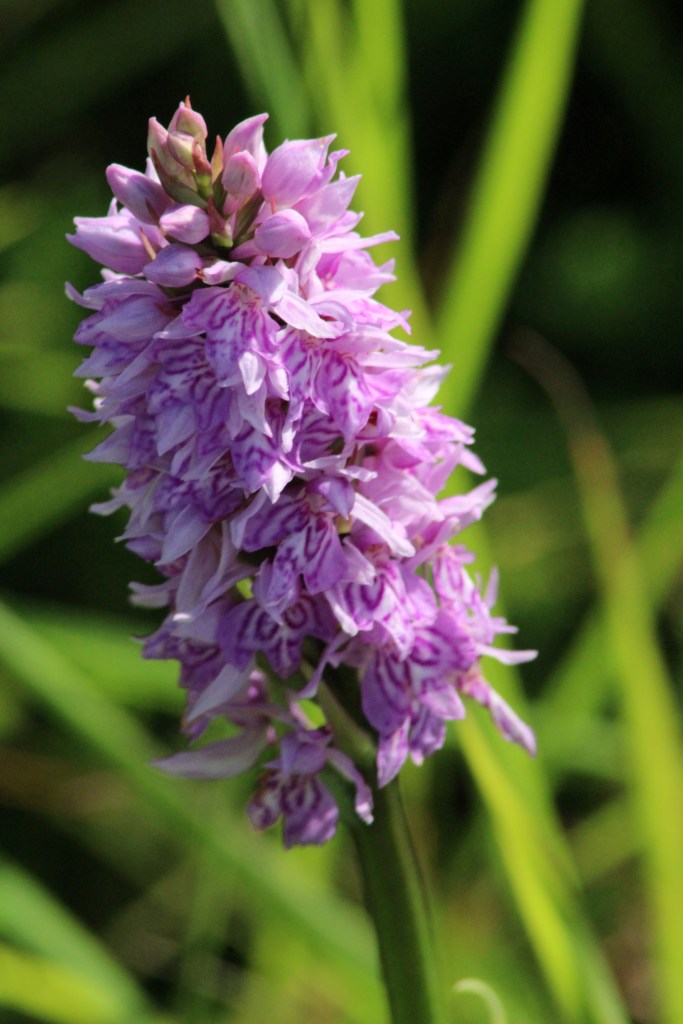
What is it? A light-pink orchid with spotted leaves (named after the leaves, not the flowers). The flowers are gathered around the stalk, and have a darker pink W shaped pattern within the light-pink surroundings. It is the most common orchid in the UK and can be found in many habitats. It does however, hybridize with another species, the Southern Marsh Orchid D. praettermissa so it may be difficult to ID correctly as a pure species at times. They attract a variety of insects, and I often see things like Burnet Moths taking nectar from the flowers.
A fact I didn’t know about this species: First identified and named in the UK. Was named after a German botanist named Fuchs. Britain’s most common orchid.
Not one of the ones I’ve seen today, but one from the dunes of Northumberland taken a few years ago (Photo: Alex Cropper)
Is it charismatic in my opinion? My usual default settings for plants is no, they don’t really do anything to warrant charisma. And that won’t change for this one, sorry…
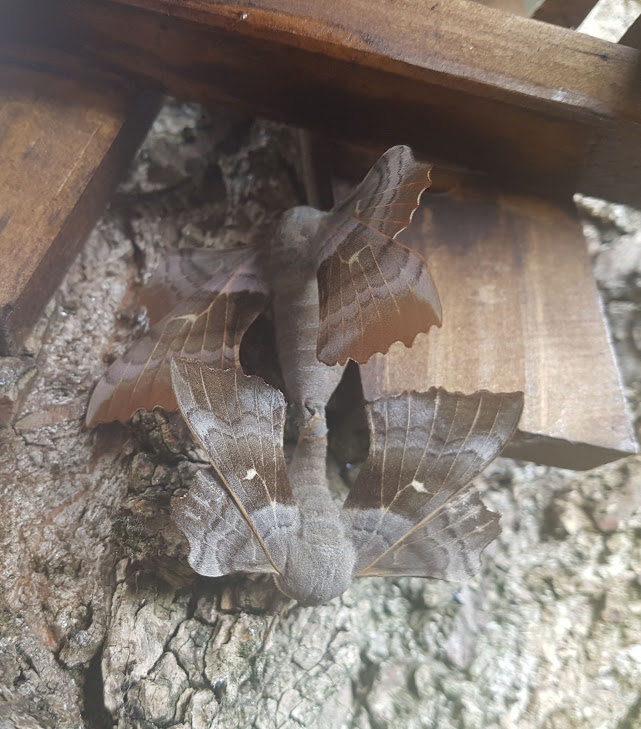
My dad shouted up earlier today (I’m living with the folks during the Covid crisis) ‘there’s two Elephant Hawk-moths on the tree under the bird feeder!’ This I had to see. Now sure enough there were two large hawk-moths right where he said, and they were elephant grey in colour. And they clearly liked each other very much. Just they weren’t Elephant Hawk-moths, which are pink and yellow, a lot like African Elephants, they were Poplar Hawk-moths.
What: Poplar Hawk-moth Laothoe populi (Linnaeus, 1758)
When: 14th June 2020
Where: My garden, Poynton, Cheshire, UK
Who saw it? My dad and I.
How was it recorded? Logged on my moth spreadsheet to be sent to the county recorder at the end of the year.
Is it bigger than a blackbird? Even though it is big for a moth it is not bigger than a blackbird.
What is it? A large common grey hawk-moth. A starter hawk-moth if you would, but nevertheless it looks spectacular. Dark grey in colour with wings that looks like they’ve been cut out from an odd pattern and stuck haphazardly onto the insect. The body of the moth is furry and broad where the insect’s fat reserves are held, it needs these as it doesn’t feed as an adult. It does all its eating as a larva. The adult stage is purely there to reproduce. They turn up all the time in moth traps, hence a starter moth, but they are the sort of moth to get you hooked. Butterflies take all the glamour credit, but moths are where it at.
A fact I have learned about this species: Female hawk-moths are attracted to light before midnight, males after. They must have wristwatches…
Some friendly Poplar Hawk-moths under a bird-table (Photo: Alex Cropper)
Are they charismatic in my opinion? Yes. Just look at them!
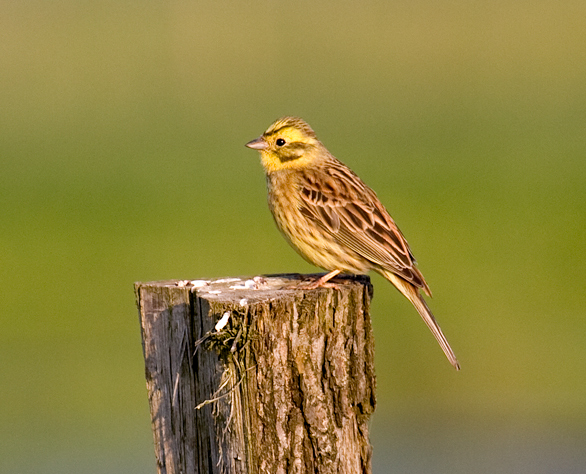
“A little bit of bread but no cheese” is what a Yellowhammer does not say no matter how many bird books tell me otherwise. The phrase makes no sense, who eats bread on the assumption that cheese automatically comes with it? And so much so that they feel the need to add the stipulation that the bread they’ve ordered (I’m imagining a small yellow bird ordering food in a cafe here, a tiny bird sized cafe, possibly in a converted bird box…) come with no cheese. But the bird does have a really distinctive song, which sounds more like “If you go to the shops, remember me”. The key to the yellowhammer is the long drawn-out eeeee at the end of the phrase, hence the mnemonics to remember the song and who sang it. A declining bird, and one I hadn’t heard in my home county, until this week.
How was it recorded? I will put the record on eBird when I remember to do so!
Is it bigger than a blackbird? No, about the same size as a house sparrow or chaffinch.
What is it? A small mostly yellow bird in the bunting family (related to Reed and Corn Buntings). It’s head and breast, of the male that is, is bright yellow whilst the wings are a duller rufus-brown colour. The male also has a distinctive black mask consisting of three horizontal stripes across its face. The female looks like a washed out version of the male, with vertical dark stripes on the breast. They are non-migratory and occur in most areas, but rarer in the north of England (where I live), and part of Scotland than elsewhere in the UK. So it was great to come across my first ever one from my home county last week. They are a bird that is declining across the board unfortunately; they are a classic farmland species and like many others have suffered from loss of habitat and increases in insecticide use, and modernising of farming practices which decrease their food source.
A fact about that I did not know: It is a little vague about the ‘hammer’ part of the bird’s English name. One source I found suggests it is a corruption of the word ‘amber,’ maybe referring to the rufus colour of the bird’s wings? No doubt it’s a name whose meaning has been lost in the mists of time.
Is it charismatic in my opinion? Despite it’s song which is about cheese if you believe the books, i’m sure it is. I’ve not seen too many, but they always make me look for one when I hear the distinctive song, but i’m not sure what they do? Maybe I should really find out, but at the moment they don’t do much for me. Controversial!!!
 A Species a Day