It’s been over a week since my last post. No excuses other than lethargy and being relatively busy at work (okay, two excuses!). I’ve actually barely been out walking around my park, I went last Friday and this Friday (as in yesterday) and that’s it. Granted my work allows me out onto sites, which is a lucky godsend in the current climate, so I’m not totally devoid of the outdoors and I have seen and heard some decent wildlife which may form future blogs (if I get my finger out and start writing these regularly again). Today’s subject is something I saw both yesterday and my previous trip to the park (plus lots of others) and is something which isn’t normally associated with the UK.
What: Red-eared Terrapin (Slider) Trachemys scripta (Schoepff, 1792)
When: 24th April 2020
Where: Poynton Pool, Cheshire, UK.
Who saw it? Me and a lot of others who I heard commenting on them.
How was it recorded? On the iRecord app.
Is it bigger than a blackbird? Yes, standard loaf of bread sized I’d say.
What is it? A terrapin, a non-native terrapin. Actually, all terrapins are non-native to the UK, we only have six native species of reptile and terrapins aren’t one of them (although there is a species of terrapin native to mainland Europe, just not here). This particular terrapin is native to the USA and Mexico where it lives in warm freshwater. So it seems reasonable to think that one living in the cool (and often frozen in the winter) waters of northern England wouldn’t live very long. Well that would be wrong. They can live in these conditions, but thankfully, these waters are too cold for them to re-produce as there eggs need warm water in order to be fertile (I believe). The ones in the UK stem from the pet trade, as these terrapins were once popular pets (sale now banned), popular pets in the early 90s when the Teenage Mutant Ninja Turtles (or Hero Turtles here) were popular amongst kids, your’s truly included. So, some people wanted turtles of their own and bought tiny Red-earred Terrapins, which, either as the novelty wore off, or they got too big were then released into local lakes, including my local lake. Thirty years later, these same terrapins are still living in those lakes. The impact to native fauna is debatable, there is a finite population, I think about 6 in my park, and they mostly feed on plants, but would no doubt take small fish and ducklings too. In other, warmer countries there impact has been huge, out-competing native species of terrapin and transmitting diseases, a real problem. But here they are just an odd curiosity which will die off eventually (terrapins, tortoises etc. are notoriously long-lived so they could be here for a good while yet!).
A fact I have learned about this species: All of the above! They hibernate (or “brumate”) underwater over winter, living at the bottom of a lake, and only occasionally popping to the surface to breathe.
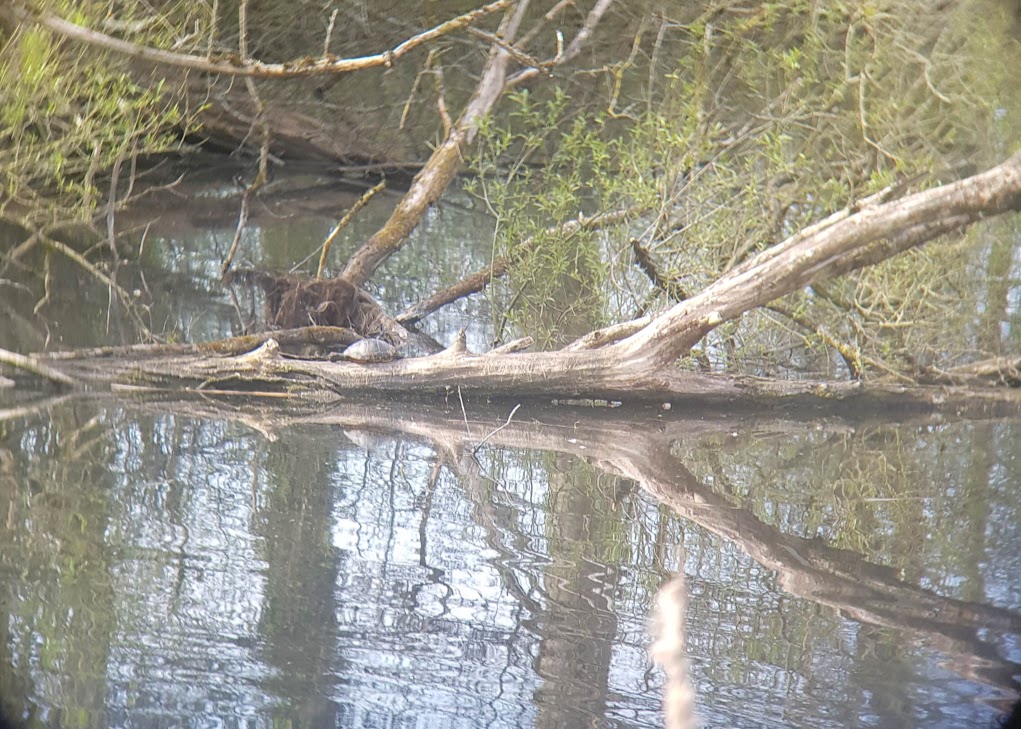
Is it charismatic in my opinion? Hmmm.. it’s one of those species that is highly successful and gets under human’s skin, but does have a huge impact on native wildlife (but not here in the UK). But I’ve not seen them do anything other than bask and be lazy on overhanging branches. They are a talking point however, but I think I would say no, they aren’t charismatic. I’m willing to change have my mind changed though,
 A Species a Day