Spring can now officially begin. The swallows (or a swallow) have arrived in my part of the world. Whilst a single swallow doesn’t make a summer it sure makes a spring! It was an odd trip out for my daily exercise walk; certain abuses of the privilege around the country could curtail any such activity for everyone, so I decided to walk round the park a lot later in the day than usual in hope of increased social distancing (I always stay well away from anyone anyway but needing to lessen the risk is always forefront of my mind instead of cancelling and living as a dangerously depressed hermit). Wildlife was behaving differently as a result of less people around, most of the geese were in the middle of the park, on the grass, rather than in the water like usual, and there were different species of goose, not just the usual Canadas, there were Greylags and, surprisingly, a solitary Pink-footed Goose. And then a swallow flew over, not linked to lack of people, they are due anyway but still it was nice to see on an odd late-afternoon.
What: (Barn) Swallow Hirundo rustica Linnaeus, 1758
When: 5th April 2020
Where: Poynton Pool, Cheshire, UK
Who saw it: Me
How was it recorded? Using the eBird app.
Is it bigger than a blackbird? Slightly smaller
What is it: A swallow, everyone knows what one is right? A highly migratory song bird that appears in the Northern Hemisphere at this time of the year having overwintered in southern Africa (the European ones do at least). There are many species of swallow around the world but the Barn Swallow occurs both in Europe and Africa, as well as in the Americas. The European/African birds having white bellies, and the American birds having buff-yellow bellies. They are blue/black on top, with a distinct orange/red faces. Adult birds have long streamers. Highly accomplished fliers, they can happily spend most of the day on the wing. They are not related to the later arriving Swifts which bear a superficial resemblance, but are related to House Martins (which will also be beginning to appear in the UK about now).
A fact I have learned about this species: One of the few bird species that naturally occurs on all continents on Earth bar Antarctica (The Barn Swallow, has six sub-species, so they will be all superficially different but the same nevertheless).
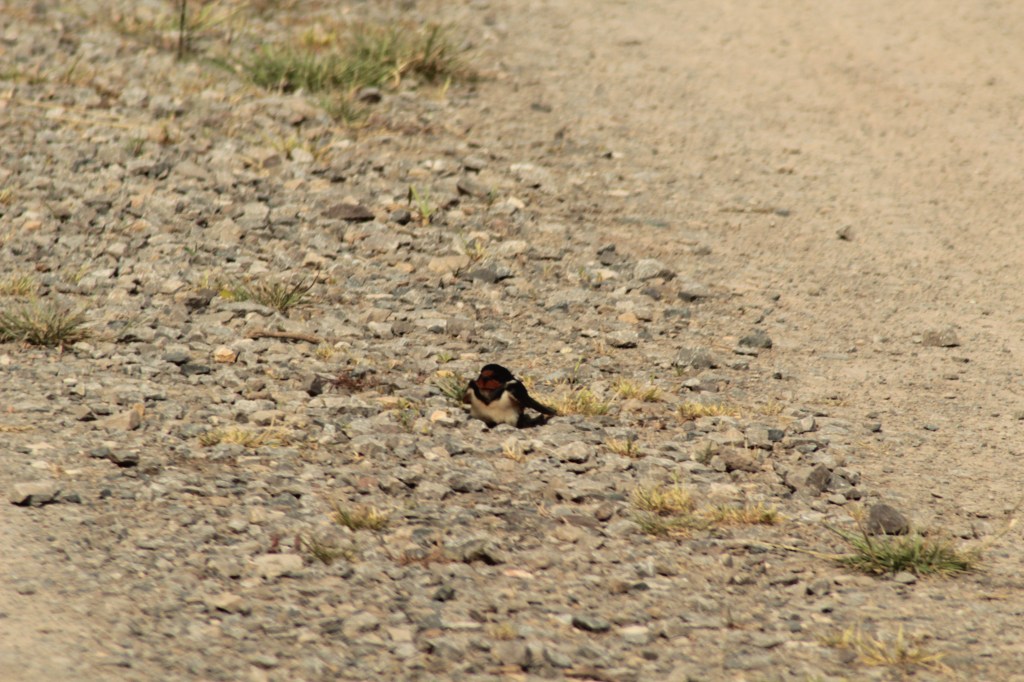
Are they charismatic in my opinion: Yes of course. They are possibly the bird of spring, when they arrive you know winter is over. And when they are here en masse they can gather in huge numbers. A small lake can be teeming with them as they skim the water’s surface for emerging insects; they never stop moving seem full of energy, I do love them!
 A Species a Day