Something different again, I’ve gone into my records to see what I saw at this time of year in other years. Being stuck at home (now with the beginnings of a cold and stomach cramp type symptoms, really sucks!) has made me think about other times, better times maybe. I had a great varied career working in wildlife conservation, working in loads of places around the UK, only for a few months at a time – one of the reasons I’ve jumped ship to ecology, less exciting but better and longer contracts (in theory, in a normal year!). So I have a lot of variety of sightings to choose from. This one comes from two years ago in Orkney, where I lived for a peedie bit. I loved living there, and if it wasn’t for the cruel arm of fate I could well be still there, alas it wasn’t to be. This sighting comes from an excursion to the island of North Ronaldsay I took towards the end of my time on those islands.
What: Tystie (or Black Guillemot) Cepphus grylle (Linnaeus, 1758)
When: 31st March 2018
Where: Off the coast of North Ronaldsay, Orkney, Scotland
Who saw it? Me, but maybe some others, can’t remember!
How was it recorded? Noted on an app and subsequently uploaded to eBird.
Is it bigger than a blackbird? Yes, maybe the same size or slightly smaller than a black-headed gull.
What is it? A seabird in the auk family (puffins, razorbills and regular guillemots are related). I always call them Tysties but their ‘official’ English name is Black Guillemot. I got this from my time on Orkney where everyone called them that, this apparently comes from an old Norse word and is the default name of the bird in Caithness and Shetland too. I think it is a better name, the thing is Black Guillemots are only black for half the year, in the other half they are white. I always saw them off the ferry as I commuted to work in Hoy from Stromness in their white plumage, only in the last few days did I begin to see them in black. They breed on rocky shorelines, but don’t breed in vast colonies like their relatives. They are circumpolar in their distribution so occur around the globe at the higher latitudes, breeding in Canada, Alaska, Northern Russia, Scandinavia and the UK (mostly northern Scotland, but also around the Isle of Man).
A fact I have learned about this species: The English name ‘guillemot’ refers to the French equivalent of the name ‘William’.
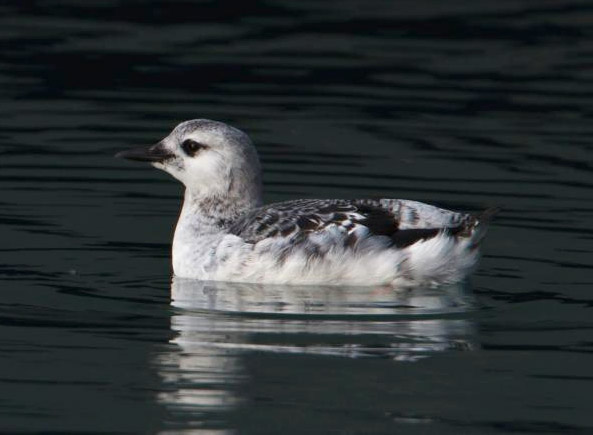
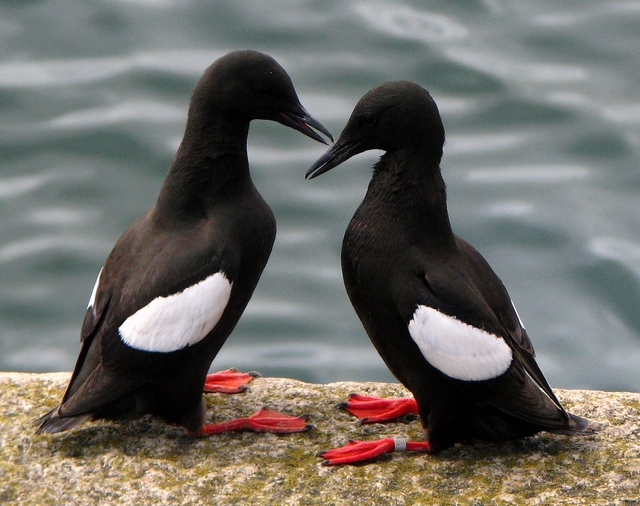
Are they charismatic in my opinion? Yeah, but may fit into the enigmatic category. I’ve only ever seen them in ones or twos and they always seemed to dive down when a boat approached so I’ve never had great views of them in winter; but they are more approachable in the breeding season apparently.
 A Species a Day