After my last post about a common garden plant (read by literally no one!) I’ll go back to a bird. And maybe a bird that is a unique migrant, as this bird is not only a spring migrant, ie: one that migrates to here to breed from warmer climates, but is also a autumn and winter migrant, so one that migrates here from colder climates. Most migrants are one or the other, this is both. And one turned up in my garden this morning as a winter visitor.
What: Blackcap Sylvia atricapilla (Linnaeus, 1758)
When: 26th February 2020
Where: My garden, Poynton, Cheshire, UK
Who saw it? Me
How did I record it? Using the eBird app.
Is it bigger than a blackbird? No. About the same size as a house sparrow.
What is it? A small brown bird in the warbler family. As the English name suggests it has a black top half of its head, or at least the male does; the female has a tawny-brown one. As I said in the description it is both a winter and spring visitor, but is more commonly known in the UK as a spring migrant with the majority of the birds arriving in mid-April. So how come I saw one today? The winter birds, studies have shown, come to the UK from Germany. The reason? Bird feeders. Even though the German birds would stand a better chance of winter survival in the Mediterranean or sub-Saharan Africa; where most birds over winter, they take a chance at surviving on bird feeder seeds which provide less sustenance than their preferred invertebrates.. The reason being is that when they return to Germany, the birds that have successfully overwintered in the UK will have a better chance at claiming breeding territory before the African over-winterers return. I may write another blog for the Blackcap when ‘our birds’ return to the UK in Spring.
A fact I have learned about this species: It’s song is so varied and rich in springtime the bird sometimes gets called the ‘mock nightingale.’
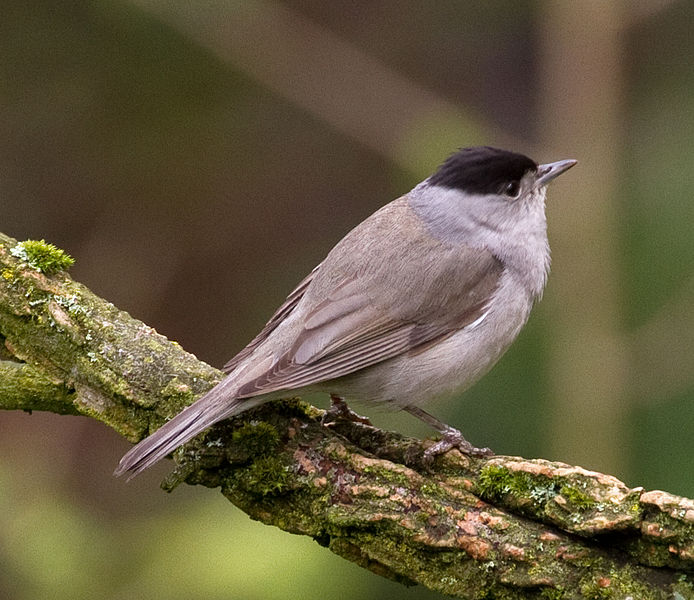
Is it charismatic in my opinion? Enigmatic at this time of the year, even though they specifically migrate here in winter to feed on our bird feeders I very rarely see one using them. They are way more charismatic in spring when they begin to sing.
 A Species a Day