Something different today. To record my bird sightings around my patch (and elsewhere) I use an app called eBird. This provides a quick convenient way of logging species and numbers of birds whilst on your walk.
Basically, when I get to a site I can select it using the app (or it automatically selects a lat/longitude position using your phone’s GPS) and it brings up a list of birds you will likely see in the area, based on previous users entries. The first flaw begins here as this list is based on a 20km radius of where you are, so some birds at your site will be listed as common when they are anything but, and some birds are listed as unusual when they are there all the time. This is further complicated when the auto-list considers the time of year, again based on previous data. The app uses a traffic light system, green birds you will see all the time, amber birds are unusual but not overly so, and red birds won’t have been seen at the site at that time of year, or at all. Currently Great-crested Grebes are listed as amber for my site even though they are an ever present, probably as they may be under-recorded or rare elsewhere in a 20km radius. It generally works though and the amber only provides an opportunity to think twice about what you are entering (a red would require an additional report with further evidence).
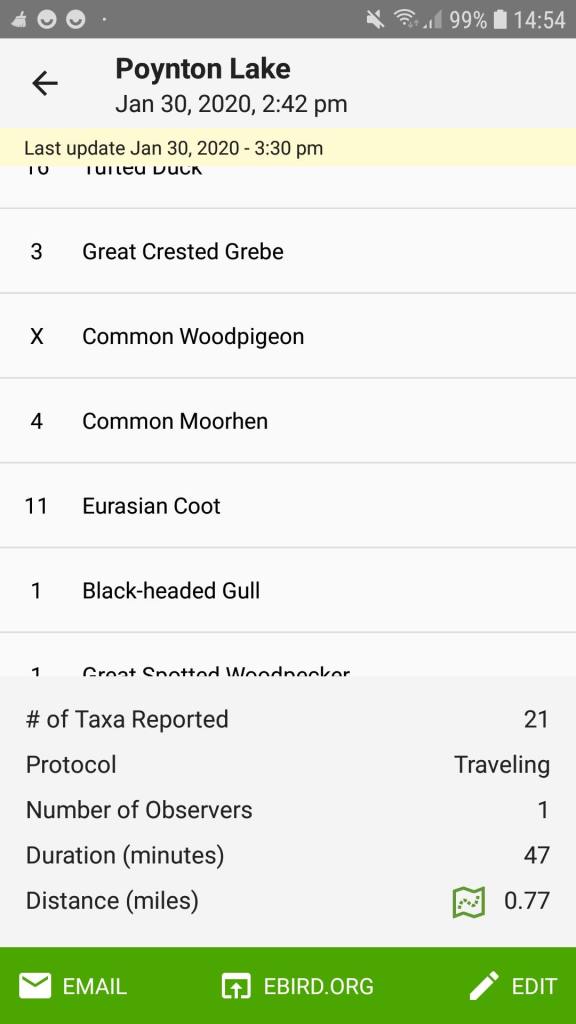
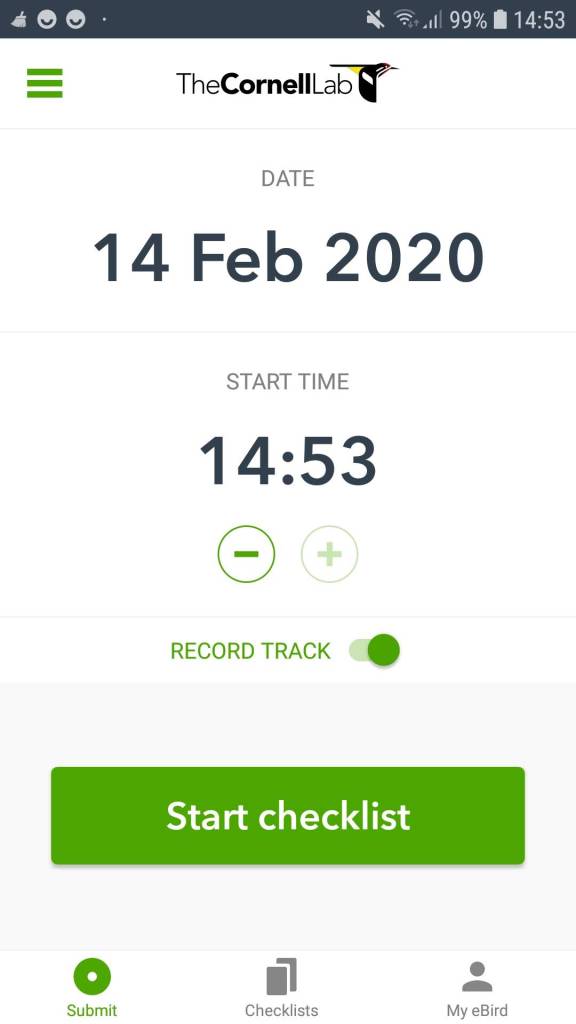
The best feature of the app is the tracker system, which follows your walk in real time. This may sound slightly pointless but is in fact a great way to record effort. If you walk a mile and take 10 minutes you won’t really have seen much, if you take an hour than chances are you have seen most birds on your journey. Great, unfortunately it doesn’t work too often. Phone apps by there nature should still run in the background when the phone sleeps in your pocket or you take a call or whatever. Most of the time eBird does but occasionally (and increasingly so) it sometimes “restarts” the trip timer, at which point the tracker stops. You get to the end of your session, confirm your data, and find the app thinks you’ve only walked a few yards rather than a mile, despite having bird-watched for over an hour. A minor inconvenience as you can edit the distance manually, but it won’t be as accurate (also frustrating as I know I’ve walked a mile and I have no independent way of proving this, I hope fitbits don’t have this issue!).
I did have previous concerns about the end data not reaching the local recorder (who would handle the data and make it useful for others, if someone one day want to drain my local lake, the gathered bird data I and others have gathered should influence the decision providing someone else knows about it), however the data is availble to them, but not directly unlike another app ‘BirdTrack’ whose data goes direct to the recorders; I find the app to be a bit clunky though for my purposes.
After I have finished and sent my data off I can see my data on the eBird website. If the site is a designated ‘Hotspot’ – where a number of users go. Then you can compare your data to other birders and compare it historically, year to year, month to month. This is where eBird really wins in my opinion.
I would recommend it to anyone who goes birdwatching regularly, it’s easy to use and easy to see your results, and it’s technical flaws, whilst annoying don’t seem to affect data quality too much.
 A Species a Day