Back to species that I have actually seen for real recently! This will be a rather shorter blog than normal as I’m running late for my work ‘Christmas’ party (I work in a bar, it would be stupid to have a Christmas party before Christmas!) but I still need to write a blog – can’t fail this late into my challenge! So here goes.. first bird I see in my garden is…
What: Dunnock Prunella modularis (Linnaeus, 1758)
When: 29th January 2020
Where: My garden, Poynton, Cheshire, UK
Who saw it? Me
How was it recorded? It hasn’t although my parents reported Dunnock from the same garden on Saturday (probably the same individuals).
Is it bigger than a blackbird? No, about the same size as a House Sparrow.
What is it? A small dowdy brown coloured bird with a greyish face and narrow bill. Feeds on the ground, so if you have bird feeders you won’t see them on the feeders themselves but they’ll usually be underneath hunting for the crumbs. They have a pleasing warbling type song which according to the book starts in January but the ones in my garden started singing on December the 23rd. Old-time naturalists (like Gilbert White) thought they were the very epitemy of a monogamous relationship, but in reality they are anything but, with males usually having a subordinate male (mistaken as a ‘loyal’ female in days gone by, the sexes are identical) to do his dirty work whilst he mates with as many females as possible.
A fact I have learned about this species: The genus name Prunella is shared, perhaps uniquely, with a genus of plants Prunella who are commonly known in the UK as ‘self-heals.’
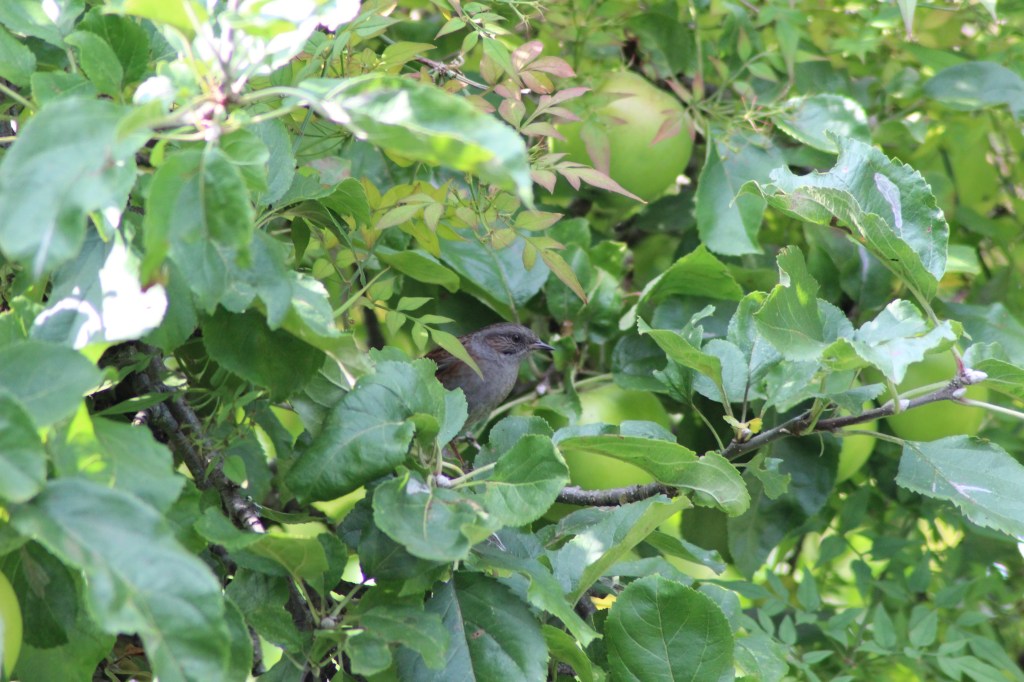
Is it charismatic in my opinion? On initial appearance no. They were the most boring bird in the garden, once being known as ‘hedge sparrows’ rather than having their own name (they are unrelated to sparrows). But now knowing what they get up to in the spring time makes up for it, and they have a great song, so yes they are.
 A Species a Day