As I try to sit down to write this, yet again my dad comes in to witter on and on and on about whatever subject is in his head at the moment (I’m living with the folks at the mo; not cool I know). He typically comes in when I’m trying to do something important; I’m trying to finish off my Master’s dissertation right now but I swapped to the blog as this takes slightly less concentration. So today’s subject is something else that goes on and on; which coincidentally started talking for the first time this year today.
What: Song Thrush Turdus philomelos Brehm, 1831
When: 18th January 2020
Where: Near my house, Poynton, Cheshire, UK
Who saw it? Me. Heard it rather than saw it.
How was it recorded? On eBird.
Is it bigger than a blackbird? No, it is slightly smaller than it’s relative the blackbird.
What is it? A small member of the thrush genus Turdus (don’t laugh, it’s actually called that). A seemingly non-migratory species in the UK which may be augmented by birds from elsewhere in Europe during the winter. They definitely migrate from other areas as they are legally shot in areas of the Mediterranean during the colder months. They start singing at this time of the year, far earlier than blackbirds, and have a fluting song with repetitive measures. Think maybe of a musician reading sheet music, compared to the freestyle jazz of the blackbird’s similar song. They are declining dramatically in the UK (Ref: Balmer et al (2013)).
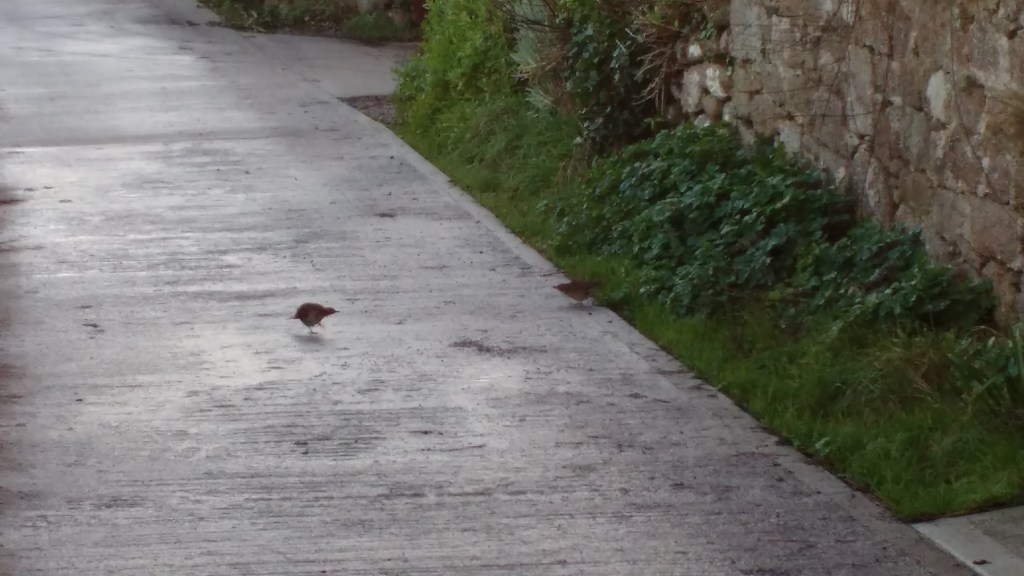
A fact I have learned about this species: Song thrushes in the Isles of Scilly, UK, particularly on St. Agnes, rarely fly and are no where near as timid as their mainland cousins. Surely a case of evolution in action, I bet if we were able to time travel a few thousand years forward they will have lost their ability to fly.
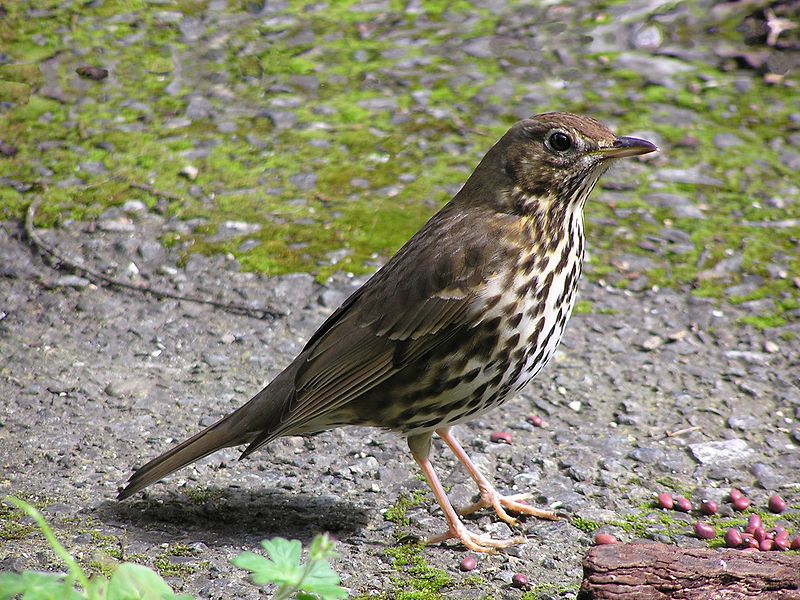
Is this species charismatic in my opinion? Yes. They have a habit of finding snails, selecting a suitable stone, and then smashing said snail onto said stone in order to extract the juicy occupant for lunch. They are usually incredibly shy and the only clue to their presence is their song, unless you’re lucky enough to have one visit your garden where they occasionally like to nest.
 A Species a Day
