14th December
There’s been a frozen ground beetle in my freezer since the end of May. For some reason I never got round to getting it out and trying to identify it. As I said in a few days ago for another species of ground beetle (Loricera pilicornis) I’m in the very early days of trying to learn about them (huge subject, 300+ species, but that’s nothing compared to the 4000+ species of beetle overall). The method when starting out is to collect specimens in order to build up a reference collection, which together with books will build your knowledge up if you use them enough. Unfortunately you do have to dispatch specimens in order to do so, hence why it was in the freezer. In order to preserve species you first know what they are, easy in the case of birds or mammals. Not so easy when your species are small and the only differences between species are subtle and minute features,
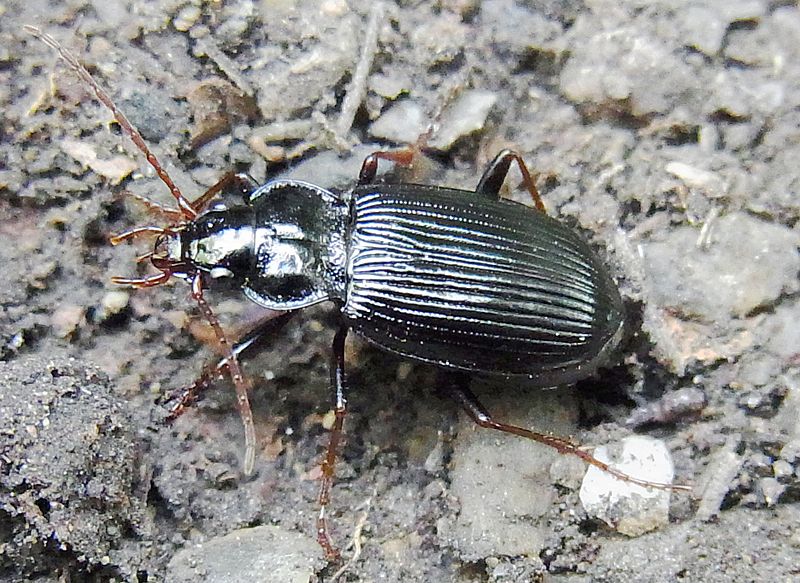
Nebria brevicollis (Fabricius, 1792). There is actually a tentative English name suggested by one of the UK’s beetle experts; Common Heart-shield but I’ve only seen it in one place so I’ll use the Latin only for my list.
This beetle is one of the most common species of beetle in the UK. My specimen came from an amphibian pit fall trap on a development site near Warrington. There must have been hundreds or even thousands on that site as some of the traps had over 10 individuals and there was perhaps 150 traps. In other words this maybe one of the most common animals in the UK, but one I spent over an hour trying to ID. It is strange that many people could correctly name a rare British bird but would not be able to name an incredibly common insect (me included!). The picture may offer a clue as to why it is hard to identify. It’s black and indistinct, like many ground beetle species.
Advent species so far:
- 1st: Goosander Mergus merganser
- 2nd: December Moth Poecilocampa populi
- 3rd: Horse Chestnut Aesculus hippocastanum
- 4th Black-headed Gull Chroicocephalus ridibundus
- 5th Cape Sparrow Passer melanurus
- 6th Loricera pilicornis
- 7th Great Tit Parus major
- 8th Tipula paludosa
- 9th Redwing Turdus iliacus
- 10th Bank Vole Myodes glareolus
- 11th Tawny Owl Strix aluco
- 12th Sparrowhawk Accipiter nisus
- 13th Kingfisher Alcedo atthis
- 14th Nebria brevicollis
 A Species a Day