I’m almost halfway through my new job; I should be half way through the first month of my new job, but hey circumstances. My job is pretty standard ecological consultancy basics in the UK – at this time of the year that means helping out Great Crested Newts. Now, as many people who work around them know, the GCN (as those in the know call them) predominantly live in and around future or current building sites. Most building sites in the UK have been mothballed for now, but handful haven’t, so all the ecological work that supports them must carry on. GCN are one of the most protected species in the UK, and need removing from the building sites for work to happen, which is where I come in.
What: Great Crested Newt Triturus cristatus (Laurenti, 1768)
When: 12th & 13th April 2020
Where: Winsford, Cheshire, UK
Who saw it? My colleagues and I.
How was it recorded? Sighting submitted via company to inform building works.
Is it bigger than a blackbird? No, but they are pretty big for an amphibian.
What is it? An amphibian in the Salamandrid family; which consists of salamanders (as the name implies) and newts. There are three native species of newt in the UK, the Great Crested, the Smooth, and the Palmate. The GCNs are about twice the size of the other two species and have narrower habitat requirements than their relatives, hence why they are endangered and are fully protected. They like old ponds, namely ponds that supplied drinking water to cattle, ponds which as farming methods modernise are becoming surplus to requirement. So the ponds in farmland are being filled in, and a lot more have been destroyed due to suburban expansion into the countryside. Thankfully, the requirements of the GCN (there are a lot more, but this is an overview) are now well known and it is possible to remove them from the sites and transfer them to new, or existing ponds, crucially ponds that won’t be destroyed anytime soon. They are rough to look at, and look black out of the water, they have a bright orange underbelly with distinct markings; very contrasting. The males have a crest at this time of the year, which is very noticeable in the water, less so out of it.
A fact I have learned about this species: In fairness most of the above is new to me, I’ve had to learn the basics quick in order to understand them and my job. But maybe this one sticks out: They are encountered in every county in England, except Cornwall, no idea why this should be, maybe a lack of suitable ponds? Or there are too many witches there looking for eyes of newts, who knows?!
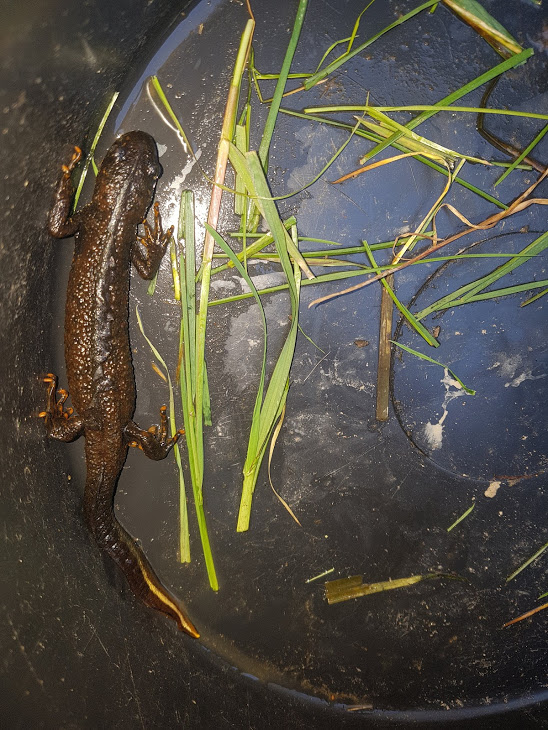
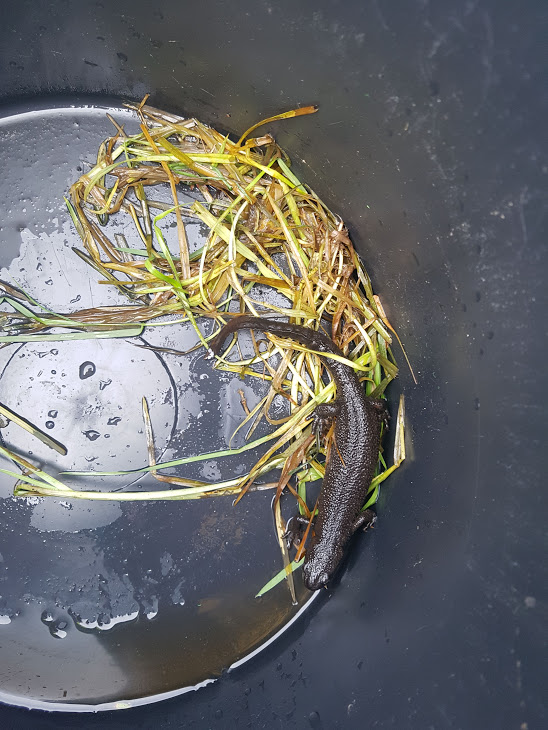
Is it charismatic in my opinion? I actually would have said no a week ago. But now having seen and handled one (under license) I have changed my mind. They have character, admittedly they don’t move very quickly but they are certainly alert and don’t prentend to be dead (at least not for very long). They are probably mostly enigmatic, most people haven’t seen one and they are nocturnal so most people probably won’t do, but most people will have heard of the Great Crested Newt.
 A Species a Day